Four years ago China’s government released me from 1,019 days of wrongful detention as a political hostage. If not for heroic advocacy coordinated by Vina Nadjibulla and diplomacy led by Ambassador Dominic Barton, I might still be in a cell there, with the crisis unresolved. I’m eternally grateful for my liberty. Beijing still hasn’t returned all of my personal property, but at least its senior officials are talking to their Canadian counterparts again. How can Canada advance its interests with these reopened diplomatic channels? Scroll down for spot-on recommendations by Vina, now Vice-President of Research & Strategy at APFC, on a new China Strategy for Canada.
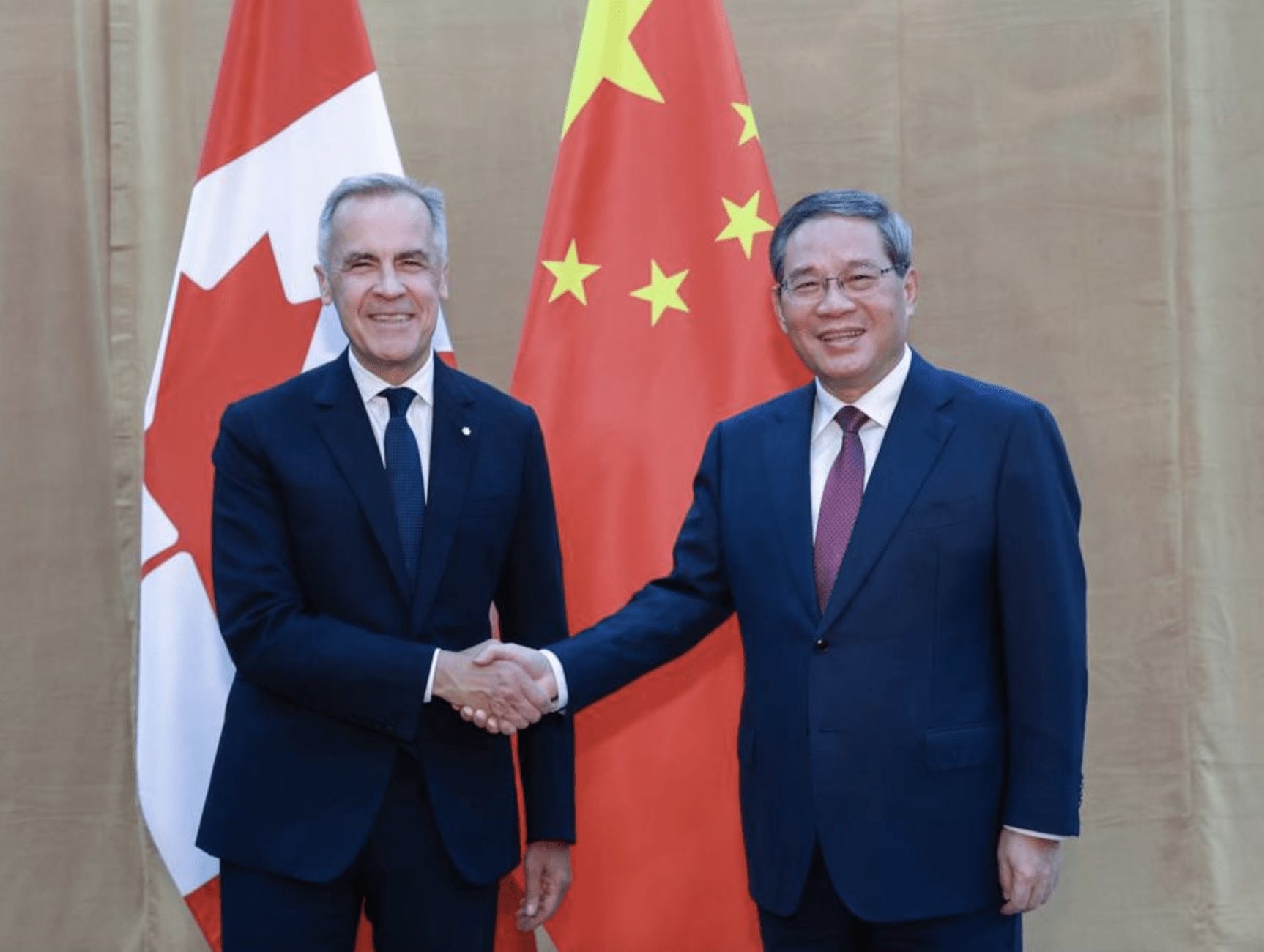
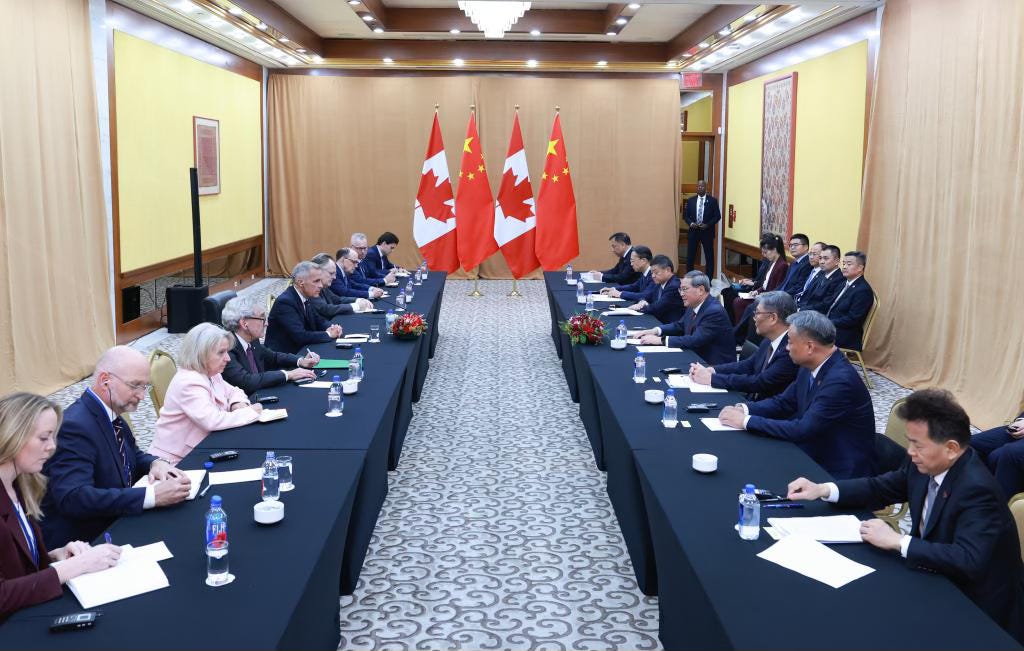
On Sep. 23 on the sidelines of the UN General Debate, Canada’s Prime Minister Mark Carney and China’s Premier Li Qiang led the first substantive in-person discussions the two countries have had at their level since 2017. The dialogue, which included Commerce Minister Wang Wentao, focused on economic issues, and I hear it was relatively frank and constructive. Speaking to the press, Carney emphasized opportunities to sell China more energy and commodities. He also alluded to the main trade sticking point: Canada’s defensive tariffs to stop the dumping of Electric Vehicles, steel and aluminum from China, and Beijing’s retaliatory tariffs on canola and more.
While it’s good that Canada and China are talking again, we should have modest expectations for what can be achieved. Even with both sides under pressure from Trump’s tariffs to find new market opportunities, prospects for cooperation are limited by the Party-state’s hostile behaviour. Canadian negotiators should keep in mind that their CCP counterparts will link issues, are ruthlessly transactional, and won’t feel bound to honour any agreements they sign.
Front of mind should be Beijing’s decisive support for Russia’s invasion of Ukraine, which is not only enabling Putin to kill thousands and menace NATO countries, but also costing Canadian taxpayers billions. That fits with the CCP’s strategy to distract and weaken Western democracies while it works to dominate East Asia, displace the U.S. and reshape the global order in line with its own authoritarian imperatives—all while keeping Western elites complacent about continuing to do business with China.
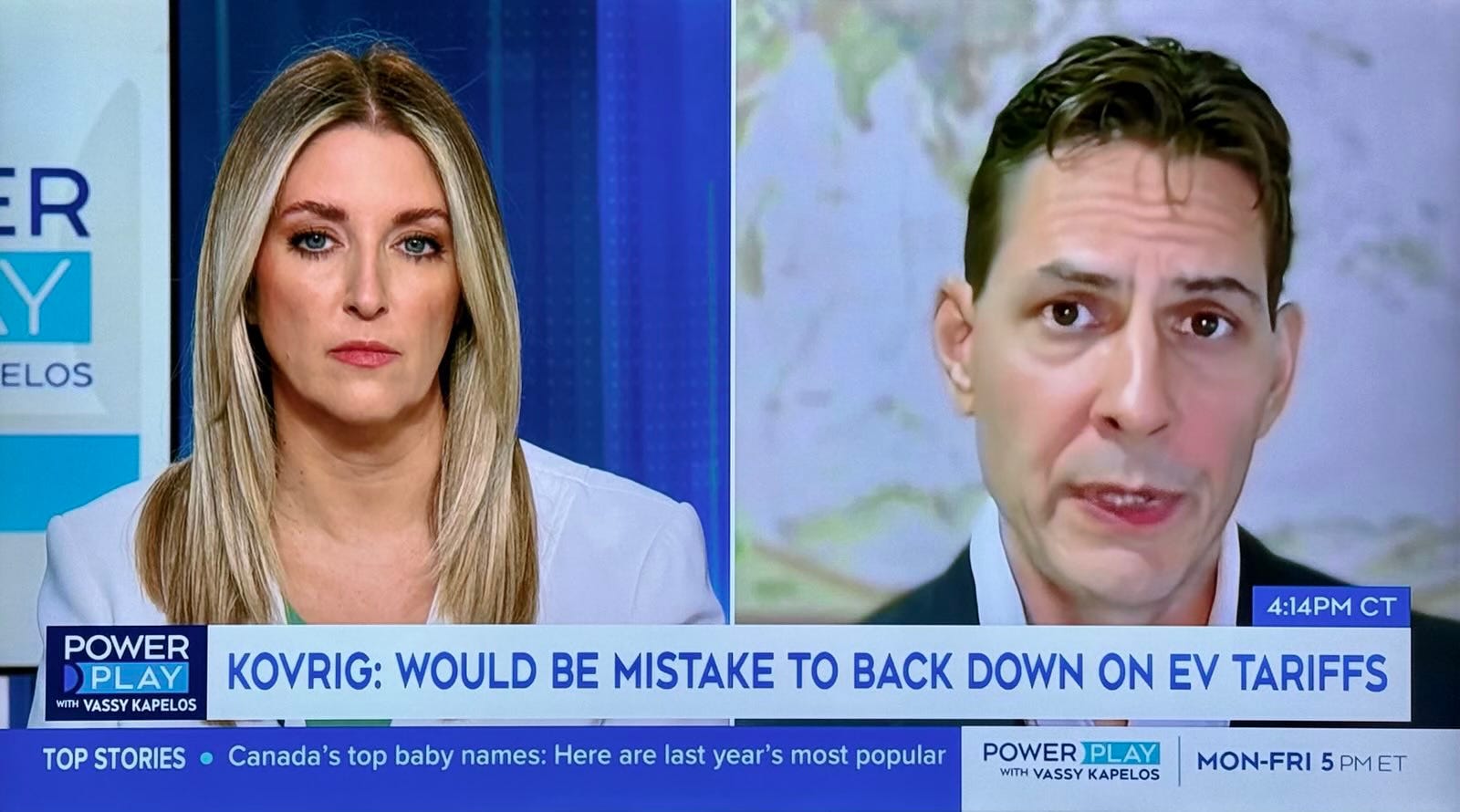
Last week I spoke with CTV News “Power Play” host Vassy Kapelos about the Carney-Li meeting and its implications. Video here. See my earlier post, “High Tariffs and Low Trust”, for context.
In Policy Magazine, Vina argues Canada needs to protect what matters, engage only where interests truly align, and be on guard against the Party-state’s coercive conditionality and issue-linking.
Pragmatism Over Wishful Thinking: Crafting a New China Strategy

By Vina Nadjibulla
Vice-President of Research & Strategy
Asia Pacific Foundation of Canada
Perhaps the strongest indication that Prime Minister Mark Carney’s UNGA meeting with Chinese Premier Li Qiang last week signalled a new era in bilateral relations was the Xinhua coverage.
“China and Canada have been promoting the improvement and development of their bilateral relations in a practical and constructive manner, which has been widely welcomed by all sectors in both countries,” reads the Xinhua piece.
Quite a departure from the rhetoric out of Beijing during the lowest days of the dynamic over the past decade.
Foreign Affairs Minister Anita Anand is expected to travel to China in mid-October, with additional ministerial visits likely to follow this fall. Taken together, these moves amount to a visible thaw in a relationship that has been in a deep freeze for several years.
Mr. Carney has described his approach to China as a “variable geometry engagement”: deep engagement where interests align but limited or no engagement where our national or economic security is at stake. While this is sensible in theory, it is far harder in practice.
Beijing rarely compartmentalizes. Rather, it links issues, redraws red lines, and often conditions cooperation on acceptance of its preferred narratives on Taiwan, the South China Sea, and human rights.
The Biden administration’s selective engagement with China produced only limited results. For Canada, which has far less leverage, the only way selective engagement can work is with clear guardrails at home and strong coalitions abroad.
When Ottawa released its Indo-Pacific Strategy in 2022, it effectively situated China inside a larger regional plan, which was closely aligned with U.S. policies at the time. But the world has moved on, and Washington’s own approach to Beijing is shifting.
Meanwhile, the structural challenges of dealing with China remain: state-directed industrial policy, data-localization demands, arbitrary regulatory action, economic coercion, and supply-chain vulnerabilities—alongside national security concerns about foreign interference, transnational repression, and Beijing’s support for Russia.
The United States may be viewed as the more disruptive power at the moment, but that does not make China any more trustworthy.
Read the rest of Vina’s commentary in Policy Magazine.