


Canada in 2024 imposed hefty import duties on Chinese electric vehicles, steel and aluminum to counteract the massive subsidies and other economic distortions that are driving the domestic overproduction, price wars and a tidal wave of exports that are part of China Shock 2.0. The Trudeau government’s main purposes were protecting Canadian industry and aligning with similar American policies. They weren’t WTO-compliant, but doing nothing would likely have let in even more cut-price imports as trade diverted from the closed US market.
In spring 2025, Beijing slapped high tariffs on Canadian canola, seafood, and other vulnerable agri-food sectors, and said it would lift them if Ottawa dropped its own duties. The retaliation is not only unjustified—the Canadian exports are not unusually subsidized—but also asymmetric. Canada mainly denied potential sales of future exports; China inflicted an immediate halt on current exports.
Now the two governments are negotiating. This week in a Q&A with Carmine Starnino, editor of Canadian magazine The Walrus, I unpack the PRC’s tactics and strategic ambitions. The key takeaway is that this is not just a short-term economic disagreement—it’s the latest battle in a long, geopolitical struggle over the power hierarchy that determines world order for the rest of the 21st century. Canadians need to understand the game they’re now playing and the new rules the Chinese Communist Party (CCP) is trying to impose.
Questions we discussed
Did Canada misread China’s willingness to retaliate?
Is this the start of a more dangerous rupture between Ottawa and Beijing?
How should we understand the logic behind China’s actions?
What’s the strategy? What exactly does China want from Canada?
Why is it that every Canadian government vows to diversify away from China, only to end up dragged back into its orbit?
Is fear an important factor?
Does Ottawa have real leverage against China?
Are there alternative tools Canada can use instead of tit‑for‑tat trade measures?
How do we counter threats directly?
Say you have Canadian prime minister Mark Carney’s ear. What’s your advice?
If Canadian negotiators took away just one working rule, what should it be?
Answers to these questions and more in the Q&A.
What can Canada and others do in these types of disputes with China?
I offer some answers in the Walrus. Here are some further thoughts:
Experience shows that if the targeted country holds to a clear, consistent policy line, diversifies economically and hardens politically against foreign interference, Beijing tends to quietly de-escalate and roll back once its officials internalize that the punishment is not only failing to change policies but also making them look bad. That’s more likely to happen if Party-state officials have an offramp and a face-saving narrative in which they can say the other guys “corrected their mistakes”.
To defend against Chinese companies dumping their subsidized overproduction, Canada can impose regulatory friction through measures like technical delays that are more politically neutral and procedurally justifiable than tariffs. Import quotas may become an effective alternative in some sectors. Compliance with cybersecurity regulations and Canadian weather conditions could be another non-tariff barrier. Those can buy time for North American manufacturers to adjust and infant industries to grow.
For victimized sectors like agriculture and provinces like the prairies, federal and provincial governments can use credit guarantees, insurance and temporary purchasing programs to alleviate economic losses so they have less incentive to lobby on Beijing’s behalf. Diffuse the pain across the whole economy.
Then, focus on resilience and preventing the next crisis by addressing a geopolitical market failure in which companies aren’t accurately pricing China risk. The goal should be ensuring that no single buyer can weaponize market access to demand political compliance.
The Prime Minister could lead a whole-of-government diversification strategy that reduces not only exposure to the US but also to China. It would probably require creating inter-departmental coordination mechanisms and structural hedges against coercion, with federal measures complemented by bottom-up sectoral diversification strategies. Work with think tanks and industry groups like the Canadian Chamber of Commerce and the Business Council of Canada to foster more strategic planning and national security expertise in the private sector.
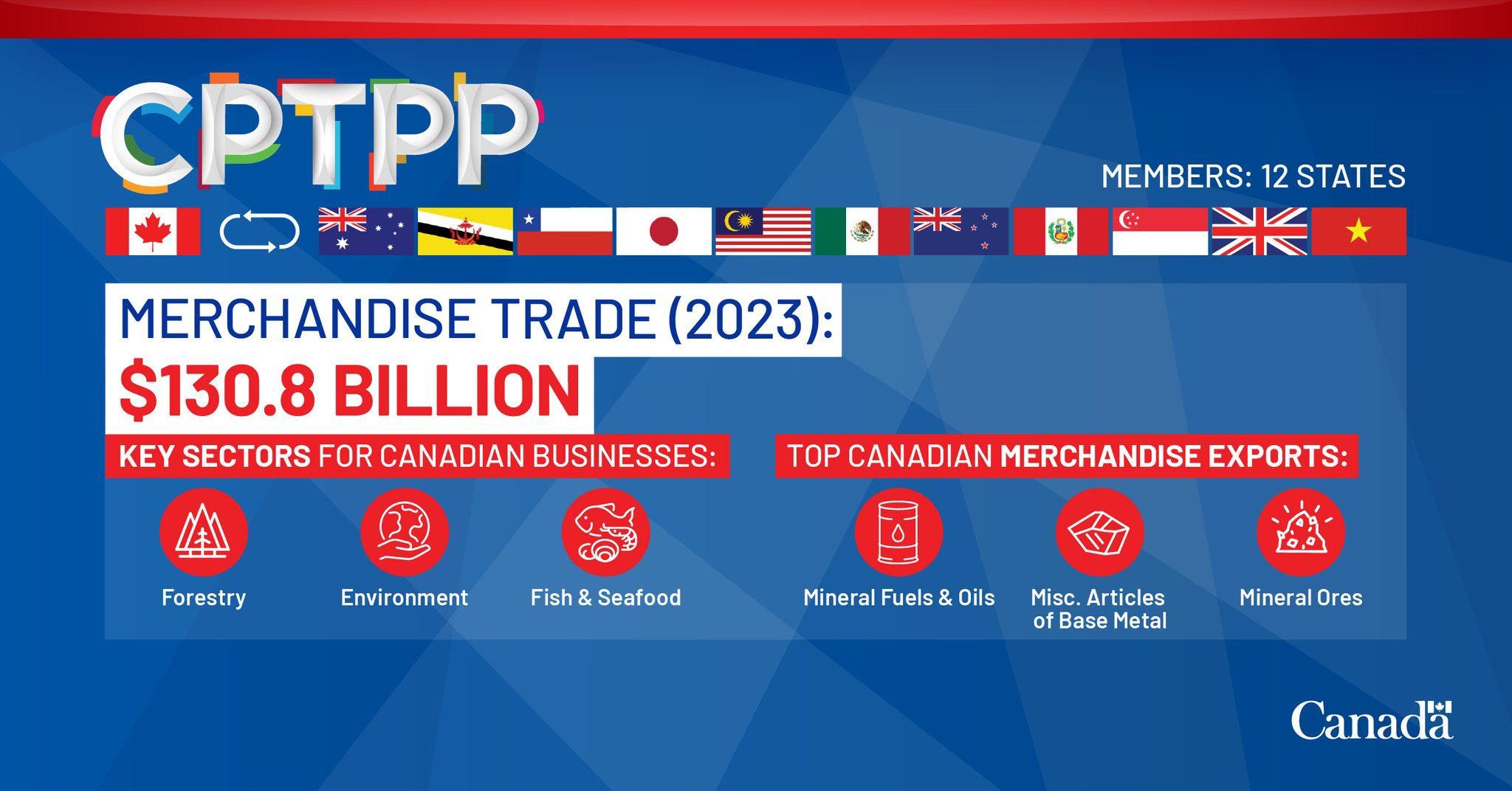
Prioritize more extensive marketing to a wider range of buyers, negotiating better terms of access to those markets, and for farmers, growing crops that depend less on Chinese buyers. Focus on markets with rising demand that are already within trade frameworks such as CPTPP. The new Indo-Pacific Agriculture and Agri-Food Office in Manila is an example of efforts to link Canadian producers and Asian buyers.
Respond to pressure asymmetrically and through small, incremental adjustments, institutions and mechanisms that are hard to retaliate against. You give me a one-time shock, I build a long term capability to shrug it off. What about incentivizing investment into Canadian sectors where China has vulnerabilities and depends on foreign imports, and building leverage as a critical supplier?
In general, domestic economic and industrial policies applied with a security lens could also increase leverage by strengthening the overall economy and reducing its dependence on politically-vulnerable exports. Continue building state capacity to protect economic security.
The updated Investment Canada Act allows for expanding national security reviews and scrutiny of Chinese acquisitions in sectors such as mining and advanced technology, particularly from state-owned or affiliated companies. Outbound investment restrictions can be tightened to restrict Chinese access to Canadian financing and technology.
The government can also tighten supply-chain transparency and due diligence requirements, particularly in sectors such as textiles, where some Chinese firms have a deplorable track record of using forced labour. Investing in further multilateral diplomacy to strengthen mechanisms that protect human rights norms would also enhance their effectiveness as means of leverage in negotiations. Support campaigns that call on China and others to ratify the International Covenant on Civil and Political Rights, for example. That’s a pain point for the Party.
Canada can also do more to push back against CCP propaganda narratives, expose influence operations and cyberespionage, and other nefarious activities. A robust foreign agent registry and related monitoring would close off channels of influence. The threat of exposing shameful behaviour can be a source of leverage. Fund civil society efforts to promote transparency and independent reporting on China.
Every time China applies a punitive measure on Canada, take material steps to enhance ties with Taiwan and other Indo-Pacific powers. Or take measures that complicate PRC access to the Arctic, where it’s trying to expand its presence and influence. Incentivize pension funds to reduce their exposure to China.
Measures like those are most effective when applied by multiple countries in coordination. Forming and hardening coalitions with other exporting countries and targets of CCP coercion would help curtail backfilling in cases where China targets one country and then buys more from others like Australia or Brazil. Beijing uses bilateral leverage to achieve submission. Multilateral responses can thwart its behavioural conditioning attempts.
What about working with the European Union’s anti-coercion instrument like a kind of nuclear umbrella? Or implementing the G7 Coordination Platform on Economic Coercion? What if Canada and other like-minded countries signed accords to all trigger similar responses if coercion was used against any one of them?
Bottom line: Canada must prioritize strategic resilience, or remain trapped in reactive dependency. Make coercion self-defeating by responding with principled realism. Categorically refuse to accept political deference as a precondition for economic cooperation, document and attribute bad behaviour, respond to it by imposing real costs and taking impactful measures, and frame Canadian resilience as a model for others.
Dive deeper on the Second China Shock and China-Canada relations in these posts:


Michael, building on your point about 'conditioning behavior'—I think there's an even deeper force at play here than just political intent: Industrial Physics.
You see Beijing's retaliation as a strategic choice to define a hierarchy. But from the factory floor, I see it as a 'Hydraulic Necessity.'
China is currently a high-pressure vessel of industrial overcapacity (driven by domestic 'Neijuan'). When Canada joins the US in blocking the EV valve, the internal pressure doesn't disappear; it must find another outlet or leverage point to force the flow.
Targeting canola or launching antidumping probes isn't just about 'teaching Canada a lesson'; it's about maintaining the 'Flow of Entropy.' They cannot afford to let any market close without a fight, not because of pride, but because of survival.
We are caught in the gears of a 'Great Bifurcation,' where political will is increasingly colliding with thermodynamic reality.
[ 'The Great Bifurcation' https://chinarbitrageur.substack.com/p/the-great-bifurcation-when-the-world?r=71ctq6]