

Hong Kong publisher Jimmy Lai has been found guilty of “foreign collusion” and “sedition” after a national security trial that dragged on for more than two years. A mitigation hearing is scheduled for January 12; sentencing will follow, with life imprisonment possible. The New York Times, BBC, SCMP, and other media have extensive features on Lai this week.
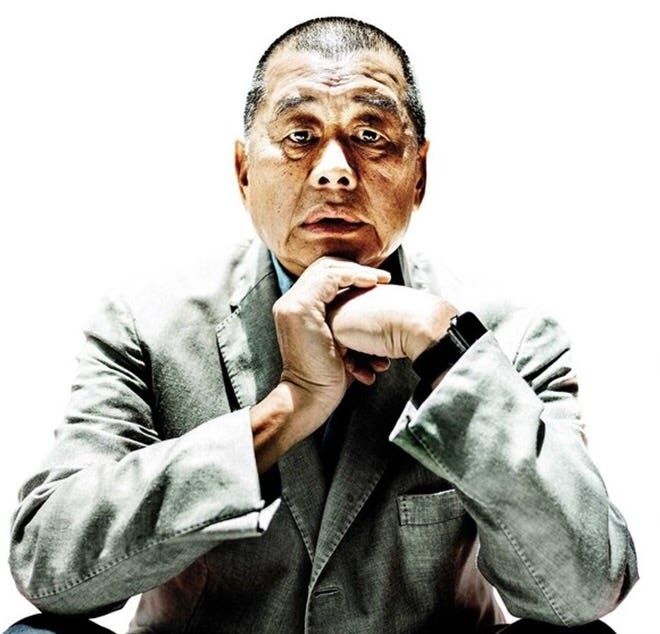
The human reality: Jimmy is 78, has diabetes, and has already spent ~5 years in custody—much of it in solitary confinement, which I can attest is a form of slow torture. He’s already suffered severe punishment, and now faces a minimum jail sentence of 10 years and up to life imprisonment.
CCP/HK Government narrative: Lai is a “traitor” who masterminded the protests and did the evil bidding of hostile foreign forces. He harboured “resentment and hatred of the PRC,” said Judge Esther Toh, and his intent “was to see the downfall of the CCP.” He “was obsessed with changing the [Communist Party’s] culture and values to one of Western values” and wanted to turn “China into a lackey of the West,” the judges said. The verdict supports a broader CCP narrative that the Hong Kong protests were part of an attempted colour revolution.
Truthful counter-narrative: Jimmy is a passionate and defiant voice for democracy and freedom for Hong Kong people, and for press freedom more broadly. He wasn’t a separatist or revolutionary. His protests were peaceful and his meetings with diplomats and foreign officials were normal advocacy and legitimate activism for China to respect the terms of the original handover agreement and allow the people of Hong Kong a say in how they’re governed.
A truly legitimate and confident government doesn’t fear peaceful protest and doesn’t need to weaponize the law to silence its critics. The smart play for Hong Kong’s government would be a commuted sentence of deportation or the more humane conditions of house arrest.
Why it matters: A British citizen faces life in prison for journalism and peaceful calls for democracy. Lai chose to stay in HK rather than flee, writing: “I must face the consequences of my actions, just or unjust.” His case is a bellwether for Hong Kong’s rule of law and press freedom globally. In violation of commitments under the Sino-British Joint Declaration and international human rights covenants embedded in its Basic Law, Hong Kong’s national security framework has widened the state’s power to criminalize speech, association, and peaceful dissent—while allowing juryless trials and designated judges. This verdict doesn’t only punish one man; it signals that “national security” can be used as a pit in which to bury critics.

What’s being done: On November 6, before a Canadian Parliamentary committee, I was honoured to testify together with Jimmy’s son Sebastien Lai, Brandon Silver of the Raoul Wallenberg Centre for Human Rights, Jonathan Stivers of the Committee for Freedom in Hong Kong Foundation (CFHK), and Lai’s lawyer Caoilfhionn Gallagher of Doughty Street Chambers. Raoul Wallenberg Centre Founder and Chair Irwin Cotler also testified December 2. Among other points, we called for Jimmy’s release on humanitarian grounds. I invite you to watch or read their compelling testimonies.
For my part, I advised the Standing Committee that advocacy has to be intensive, repetitive and persistent, and should focus on changing the incentives for Beijing and Hong Kong officials, by raising the reputational and economic costs of holding Jimmy, and encouraging face-saving off-ramps such as medical necessity for release, deportation, or at least transfer to more humane conditions such as house arrest.

CFHK Foundation advocacy concentrates on raising Jimmy Lai’s profile and advocating for policy change that builds global pressure for his release. Read more about their work and Jimmy’s case. CFHK Foundation President Mark Clifford’s biography of Lai, The Troublemaker: How Jimmy Lai Became a Billionaire, Hong Kong’s Greatest Dissident, and China’s Most Feared Critic,” helps keep his name in the spotlight worldwide.
What world leaders can do: Persistently call for Jimmy’s release as a top agenda item in every meeting with Chinese officials, while reassuring that doing so would lead to positive, reputation-enhancing statements. Convey that keeping him in prison will have a chilling effect on diplomatic and business relations, and lead to negative ratings for ease of doing business and rule of law in the territory. Ahead of planned visits to Beijing by the UK and Canadian prime ministers, signal that clemency for Jimmy would set a positive tone for progress on other issues.
What you can do:
Don’t let Jimmy be forgotten: share updates and keep attention on his health and conditions.
Ask your representatives to raise Lai’s case in every relevant diplomatic channel—and to coordinate with Canadian, UK, US, EU, and other partners.
Support organizations advocating for political prisoners, press freedom, and rule of law—like the Raoul Wallenberg Centre and Committee for Freedom in Hong Kong.
Companies that can take their business elsewhere should let Hong Kong’s government know they’re not happy about the verdict and it will have negative implications for their engagement with Hong Kong.
Update 17 December 2025
China’s Xi Jinping will meet Carney, Starmer and Trump next spring. Clemency for Hong Kong publisher Jimmy Lai should top the agenda. They should make clear that would set a good tone for the meetings.
This week on The Vassy Kapelos Show I offered analysis and suggestions on advocacy to free Mr. Lai. Listen here.
Thanks for reading!
Powerful framing on the strategic narrative dimension here. The point about solitary confinment as slow torture adds crucial human context beyond policy analysis. What stands out is the "national security" framework becoming a catch-all for criminalizing dissent, which creates predictable chilling effects across journalism and civic speech. I've tracked similar patterns in other semi-autoritarian systems where vague security laws expand enforcement discretion. The advocacy approach you outline focusing on reputational cost and face-saving offramps is pragmatc.
Thank you for ensuring Jimmy Lai is not forgotten.