


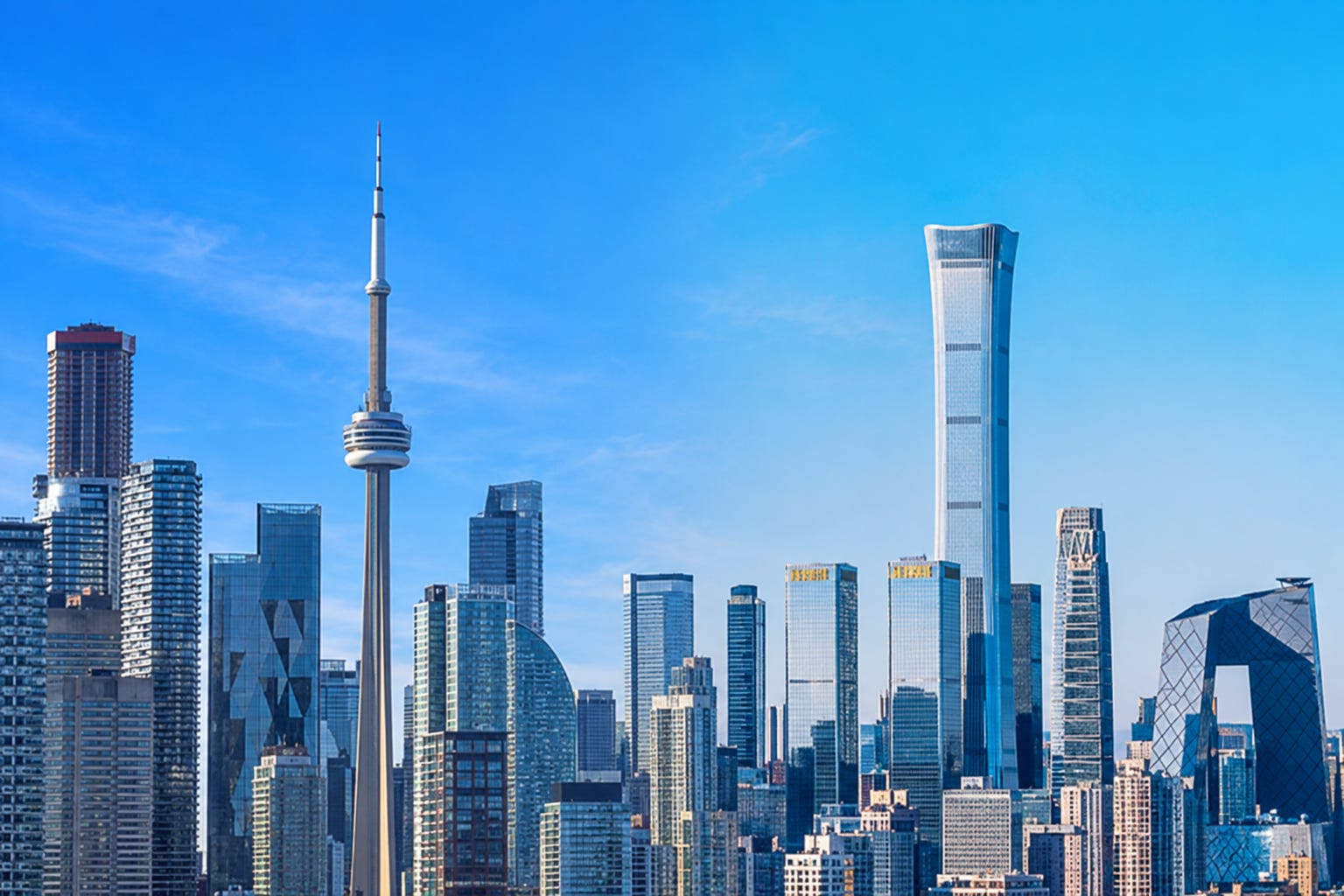
Toronto this week is the site of Canada’s Investment Summit, where Prime Minister Mark Carney and all 13 Premiers are showcasing more than 160 projects to CEOs and senior executives from 11 countries. Carney has set the goal of attracting $1 trillion in total investment to Canada over the next five years, and the Summit is a major part of that ambition. Notably, representatives of three large finance companies from China will be among those in attendance:
Why is the PRC sending these financiers? Here are some answers.
What are these state financial institutions in Toronto to do?
The three have different jobs. Together they make up a complete entry team.
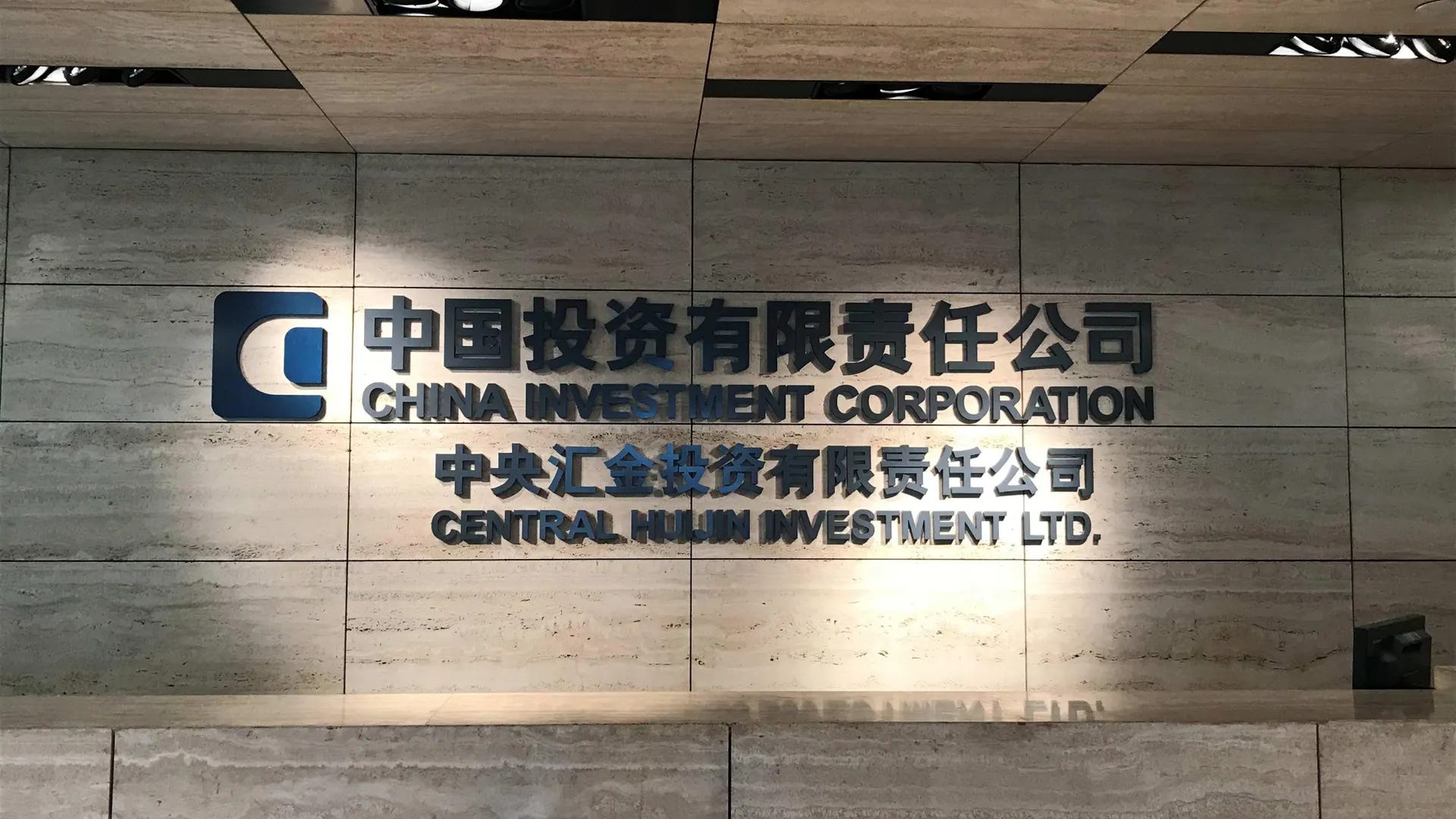
CIC (中投 | Zhōng tóu) carries the wallet. It’s a sovereign wealth fund managing more than US$1.3 trillion with the Ministry of Finance as its sole shareholder. Zongyuan Zoe Liu of the Council on Foreign Relations calls vehicles built this way “sovereign leveraged funds.” CIC’s first overseas office, in Toronto, closed during the 2015 commodity rout. It’s coming to Toronto to scout placements: probably quiet minority stakes in infrastructure and energy, or a joint fund with Canadian pension funds or Brookfield.
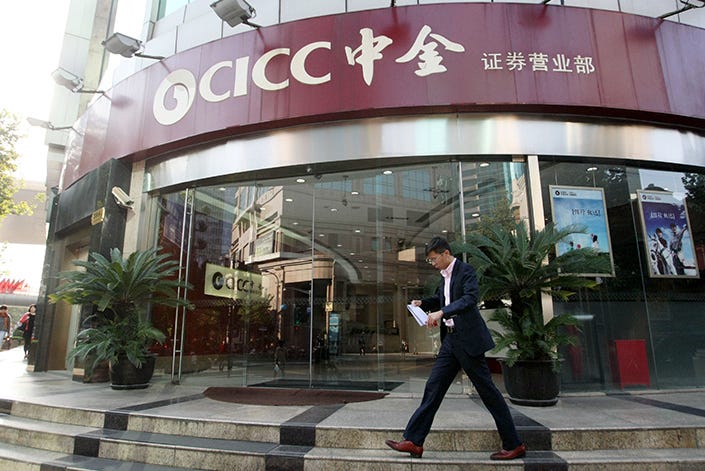
CICC (中金 | Zhōng jīn) brokers the deals. As a Party-state-controlled investment bank, it provides financial services to a range of clients: a Chinese company investing in Canada, a project needing a Chinese buyer, or an electric-vehicle joint venture needing financing. CICC comes to Canada to scout business and build relationships.
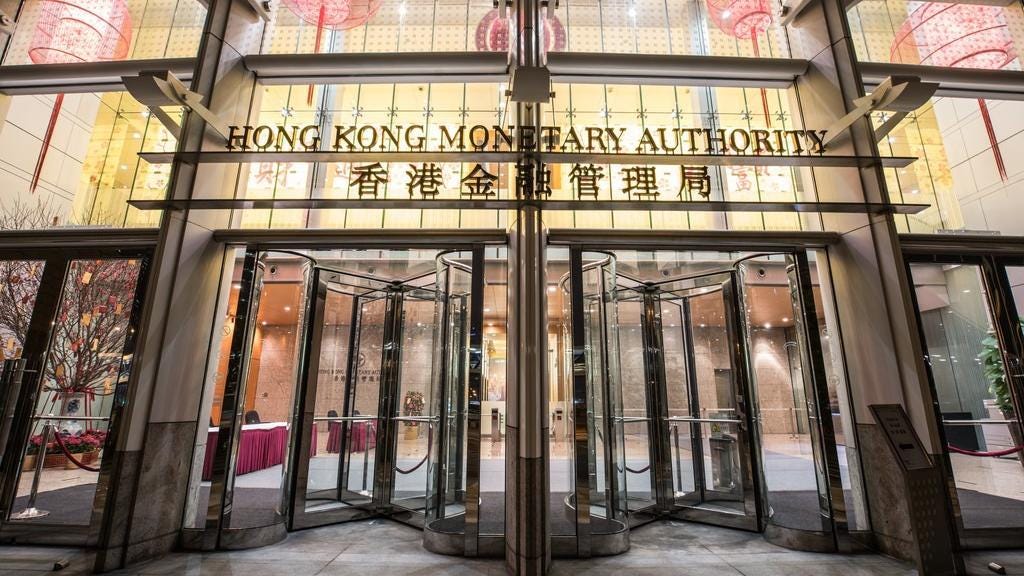
HKMA lays the pipes. It manages Hong Kong’s Exchange Fund of roughly US$570 billion and is a major investor in its own right. But its role as a channel matters more for determining how money moves between China and Canada, where it settles and where the bonds get issued. Hong Kong wants to be that waypoint, and a “Hong Kong” badge looks less sensitive than a “Beijing” one.
Why has China sent these financial players, and not others?
Lower toxicity. These three corporations appear cleaner than others that might seem like more plausible investors. That is to say, they are not facing any sanctions from Western countries, and they have “acquaintances” to vouch for them. Zoe Liu told the U.S.-China Economic and Security Review Commission in 2023 that as foreign animosity toward Chinese state-backed investment has risen, CIC has “increasingly turned to joint ventures with influential institutional investors in host countries to shelter its assets from undue scrutiny by foreign governments or to sidestep administrative blocks on investing.”
Commercial banks such as ICBC and Bank of China, by contrast, have violated all sorts of money laundering laws in Canada. That together with their dual role as Party-state policy instruments staffed with plenty of Communist Party members, makes them political landmines and fodder for political opposition.
The formal government policy banks such as China Development Bank and China EximBank are lenders, not investors. Plus they’re tied in Western opinion to the Belt and Road Initiative’s geopolitical agenda and tarred with allegations of creating “debt traps.” Private and tech capital are perhaps even more radioactive. Tencent went onto the Pentagon’s “Chinese military companies” list in January 2025; Alibaba, Baidu and BYD followed in June 2026.
These three are coming because they’re among
the few big PRC investors that can get in the door.
Has this lineup gone to invest in other countries?
The three have converged on only one region before: the Gulf, in 2024–2025. That record is the closest thing to a dress rehearsal for what’s happening in Toronto this week. In April 2024, in Riyadh, CIC anchored Investcorp’s US$1 billion Golden Horizon platform; that October, the HKMA and Saudi Arabia’s Public Investment Fund signed an MoU to anchor a US$1 billion fund; in May 2025, CICC opened a branch in Dubai’s DIFC. Nearly two years on, the HKMA–PIF fund hasn’t formally launched, and has no disclosed investments. Golden Horizon closed in October 2025 at US$750 million, a quarter short of target. Sign big but land slow: that’s classic China.
That’s the finance bucket. Over the same window, by contrast, the industrial channel delivered. In July 2024, the Saudi Arabia’s Public Investment Fund’s Renewable Energy Localization Company took 40% of two Chinese-partnered Saudi ventures: a US$985 million, 10 GW solar cell and module plant with JinkoSolar, and a US$2.08 billion, 20 GW ingot and wafer plant with TCL Zhonghuan’s Lumetech.
The leg that landed ran on Gulf money buying Chinese industry onto Gulf soil, the reverse of what the trio offers Canada. If the Gulf is the template, the tell for Canadians would be a Chinese-technology plant with Canadian provincial money in it, ahead of any CIC fund close.
What can we learn from other countries’ experiences with PRC capital?
The UK’s “golden era” with China (2011–2016, overlapping with the early part of Mark Carney’s term as Bank of England governor) is the most instructive precedent for what’s underway in Toronto. Britain courted Chinese sovereign capital harder than any G7 peer. CIC bought 8.68% of Thames Water’s parent and 10% of Heathrow’s parent in 2012, three years before the 2015 “golden era.” The financial leg split: Heathrow—still 10% CIC’s—is the surviving half; Thames Water’s shareholders, CIC included, refused further equity in 2024, calling the business “uninvestible,” and wrote their stakes to zero. The utility now awaits a creditor-led rescue that will extinguish existing equity entirely. Politically, the investments bought no durable goodwill: the UK banned Huawei from 5G in 2020 after US sanctions cut Huawei’s chip supply, and relations froze anyway. “Chinese state capital owns your tap water” became a standing target in the press and Parliament.
The lesson for Canada is that Chinese investment buys no stability,
and in the next falling-out, the stakes become a mess in your own domestic politics.
Italy adds the other half of the lesson. From 2015–2023, there was a flurry of activity. The Silk Road Fund took a quarter of ChemChina’s vehicle for its US$7.7 billion purchase of Pirelli. It was agreed upon in 2015 and completed in 2017. Zoe Liu’s reading is that the deal turned Italian business figures, Pirelli’s own chief executive among them, into lobbyists for a pro-Beijing turn in Rome, which “may have influenced” Giuseppe Conte’s March 2019 signing of a preliminary Belt and Road accord—the only G7 signature. Both outcomes were then reversed. In June 2023, Giorgia Meloni’s government limited Chinese control of Pirelli under golden-power rules, barring Sinochem (37%) from naming the chief executive while the Silk Road Fund’s 9% went untouched until a May 2024 sale. In December 2023, Rome told Beijing it would not renew the Belt and Road memorandum. Italy is the one place where Chinese money is credited with a policy turn, but that turn lasted exactly one government.
Is CIC coming for financial investment, or to invest in commodities through financial means?
Neither. It’s coming for a third thing: buying the income rights of real assets as a financial investor, without touching control of the resources. To start with, pure financial investment (stocks and bonds, Canadian-dollar allocation, diversification) is a sovereign fund’s daily routine. But that doesn’t require attending a Toronto summit, so it doesn’t explain the visit. “Controlling commodities through finance” was the 2009 playbook: buying into mines, locking up resources, etc.
Canadian law has sealed that road; even Zijin’s 15% non-controlling placement in Solaris died in national-security review in 2024. But equity was never the only lever: the playbook also runs on long-term offtake contracts and state trading and storage platforms, which the Investment Canada Act never sees, and joint ventures pitched below control, which it can reach. A clean record is not a shut channel.
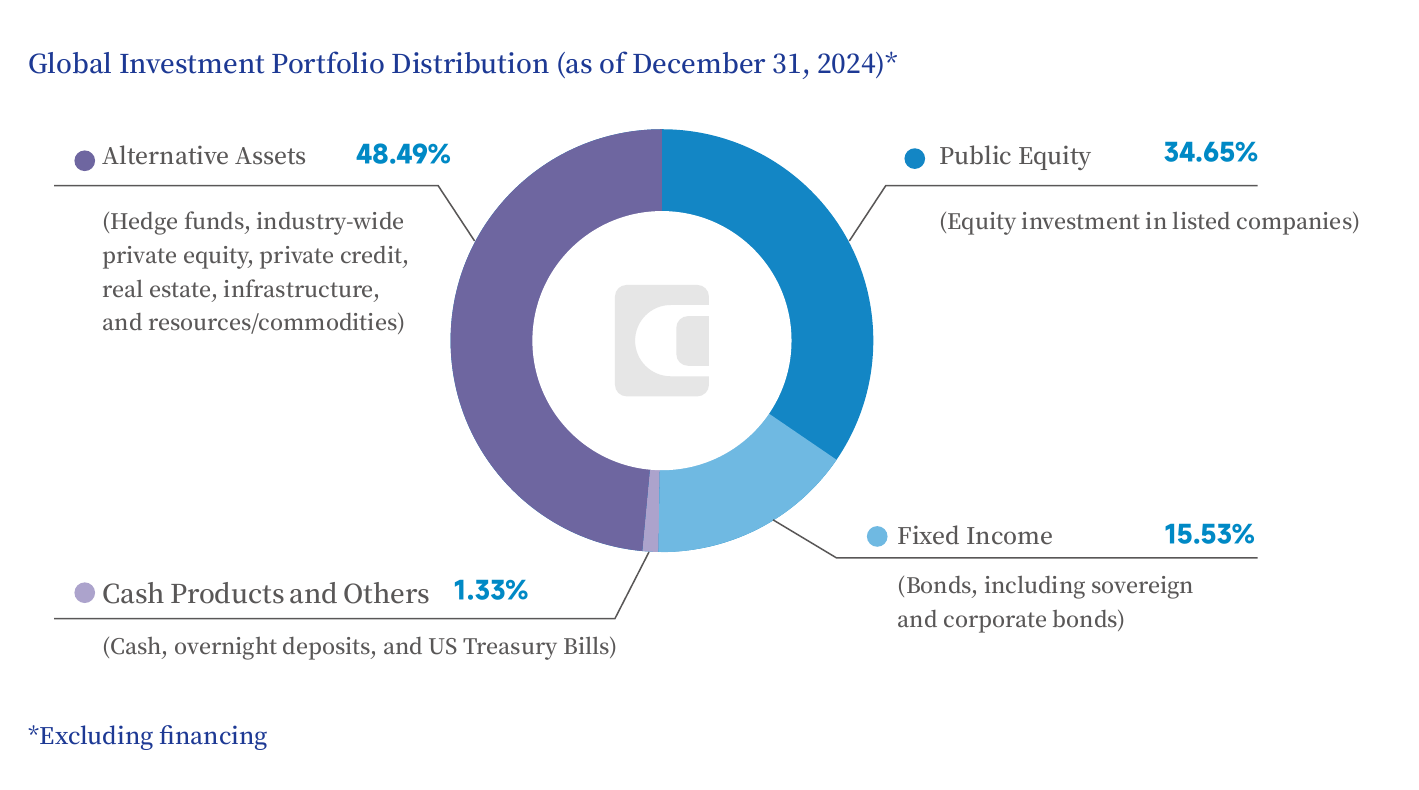
CIC is coming for a hybrid of these two approaches. Mark Carney’s selling stakes in pipelines, ports, grids, clean power, and LNG. Those are “alternatives,” which account for 48.5% of CIC’s overseas portfolio of infrastructure, real estate, private equity, private credit, hedge funds and commodities. China’s entry would be minority project stakes, fund positions, or a joint platform with Canadian pension funds: those would include decades of future cash flow with no disposal rights over minerals.
There’s precedent for this approach from another Chinese sovereign fund. In June 2021, the Silk Road Fund—65% owned by China’s State Administration of Foreign Exchange (SAFE)—joined the consortium, paying US$12.4 billion for 49% of Aramco Oil Pipelines, a Saudi Aramco subsidiary whose asset is 25 years of transport tariffs on Aramco’s crude network. That shape is “safe” for both sides. Ottawa gets passive money that triggers no filing. CIC, in turn, gets long-duration, inflation-resistant assets away from its US concentration.
China’s real resource-supply security (procurement of canola, potash, energy) runs through trade—the January Canada-China agreement cut the canola tariffs; potash and energy were never tariffed. CIC comes as a paying landlord collecting rent. The goods China wants to move are on a separate trade track. But a rupture in relations could link the two: if Ottawa restricts Chinese investment, the easy retaliation target would be the trade track. Canola first, as in 2019. Or Australia’s barley, wine, coal and lobster, as happened in 2020. Beijing’s new outbound investment regulation supplies a domestic legal channel for it.
Why Canada? Why now?
Because the door is open, and the American door just slammed. US-Canada trade talks collapsed Aug. 21. Washington imposed 50% tariffs on some US$20 billion of Canadian goods the next day and set 50% tariffs on all Canadian autos, parts, and steel from Jan. 1, 2027. The proclamations exempt energy, potash and critical minerals. The slam is on cars, alcohol and dairy. Ottawa’s July “diversification” is now a necessity. Roughly 75% of Canadian exports went to the United States in 2024, against about 4% to China. The China channel starts at roughly 1/20th of Canada’s standing exposure to the American market, which is why the impulse is politically fragile. January’s Canada-China Economic and Trade Cooperation Roadmap says the Canadian side “welcomes Chinese investments in Canada in areas such as energy, agriculture, consumer products, and other sectors.”
For Beijing, the calculation has four lines. Chinese capital is leaving home at record scale: China’s own balance of payments shows a non-reserve financial account deficit of US$820 billion in 2025. That capital cannot go anywhere too poor. Canada offers G7-grade assets in one of the few markets deep enough to absorb it.
“I suspect this has as much to do with taking advantage of Trump’s foolishness as anything else,” one leading expert on PRC finance told us. “It is especially interesting that the CIC is coming. They have strict (informal) limits on where they can invest, which generally precludes advanced economies like Canada, but by October every year they run into the same problem of having maxed out on most of their limits for high-quality investment, and so scramble to find safe places to invest. Perhaps they are hoping that if relations between the US and Canada get bad enough, they can increase their investments in Canada.”
Zoe Liu names a further driver: China invests globally “not because of its excess capital but to serve domestic needs.” A weak Chinese year doesn’t shrink the money on offer in Toronto. In a new report, “The Banks Behind the China Shock”, Rhodium Group finds 58% of December 2025’s new loans priced at or below the 3% Loan Prime Rate and expects China’s banks to “limp along longer than most global industries can withstand.”
What Canada has for sale—energy, minerals, potash, canola—is what China’s strategy calls for securing long-term. A passive shareholder gets relationships and information; getting priority requires an offtake clause.
Money is a diplomatic tool: once investments materialize, as Canadian projects, provinces and unions feed on Chinese funding, expect growing domestic resistance to any future re-hardening of Canada’s China policy.
Financially, Canada is a small substitute for the United States. Strategically, investment does double duty as a lock on the political thaw with Ottawa plus a wedge to complicate relations with Washington. Liu treats that wedge as deliberate. “Beijing has noticed these fractures and is working methodically to widen them,” she observed in December 2025, eight months before the August rupture, citing Canada’s October 2025 pledge to double its exports to countries other than the United States as an example of an ally de-risking from Washington.
What signal does this send about Chinese investment in Canada?
A fairly clear one. There are three layers:
1. China wants back into Canada, but is entering in a different posture. It has sent “financial investors.” The lineup itself is the message: quiet minority stakes. The playbook from 2009–2012 was control of mines and oil fields. Ottawa closed that lane for the oil sands in 2012 and for critical minerals with a screening policy in 2022. CIC’s own Canadian book of those years, 17.2% of Teck, was already passive.
Putting money in without formal power is the Party-state’s house style: informal CCP direction supplies the control. Abroad, the pattern travels, with formal control only where deal terms grant it.
2. This is state behaviour. CIC and CICC sit on one chain of command: CIC owns Central Huijin, which in turn controls CICC by holding roughly 40% of its shares—with about 24% to be held directly once the Dongxing and Cinda absorption closes. The chain also reaches the Chinese banks that are absent from the summit: through the Ministry of Finance, Huijin and other state companies, the Party-state is the majority shareholder of the Big Six, which in turn hold 44% of China’s commercial-bank assets. The HKMA is on no such chain; it answers to Hong Kong’s Financial Secretary, and the CCP’s hold on it is political.
Did Beijing draw up the attendee list, or did the hosts (the PM with CPP Investments and PSP Investments) select and invite them, and then Beijing cleared their attendance? The distinction is invisible from outside; but if you’re attending the summit, check the seniority of the delegates. Chairmen signal a state assignment; representative-office heads indicate routine business. Either way, investment in Canada is a diplomatic project for cementing the thaw, and who didn’t come (the banks, the tech capital, the policy banks) is the admission: those brands are radioactive in the West.
3. Canada is a test. If PRC capital can become “acceptable” again inside America’s closest ally, the precedent matters for the whole West. The objective may be re-establishing that “Chinese money is normal money” in a G7 country.
How should we assess the impact these investments could have on Canada?
The likely impact of the money is small, but the impact of what it represents is large. By the Gulf precedent, expect one or two joint funds or MoUs. The first will close in the hundreds of millions against a trillion-dollar target. The value is symbolic, showing hesitant Asian and Gulf money that “Canada is open for business.”
Indeed, the domestic political impact is the main battlefield and is both larger and faster than the money. Recipient projects, provinces and unions become constituencies of the China engagement camp as money lands. The partisan fight needs only a headline. Pierre Poilievre and Doug Ford can use Chinese investment as a target (the “spy cars” rhetoric is ready-made). If that happens, the cross-party consensus for toughness formed in 2022 dissolves a little at a time, and China policy morphs from the consensus issue it should be into a partisan one. For example, Spain’s regional governments (Catalonia, Galicia, Aragón) packaged idle plants, employment pressure and port logistics for Chinese manufacturers, ahead of and independent of the European Union’s rules and preferences. If that pattern repeats in Canada, expect softening to appear provincially (ahoy, BC Ferries) before it does federally in incentives and pressure on Ottawa; screening itself stays federal.
In terms of its impact on US relations, the cost may exceed the value of the money. Washington’s stated grievance is Canada serving as a conduit for Chinese goods and cars. Rhodium’s verdict that China’s financial distortions are “at the root of today’s global trade imbalances” gives economic-security hawks a finance case too.
A passive stake is not on that list yet, and the statutory trip-wire is specific: a project 25% owned by one Chinese entity, or with a director it appoints, is a “prohibited foreign entity” whose American customers risk their clean-energy credits. A 10% stake with no board seat trips nothing. Set “how much Washington will fine” against “how much China gave”—that account may well net out negative.
Finally, the security impact is low at this stage but contingent on holding the line at the next phase. Passive equity can’t steal secrets or cut off supply. What matters is the integration it opens: EV joint-venture plants, software and data, supply-chain embedding (Industry Minister Mélanie Joly’s four conditions are the frontline), and the quieter elite capture entities like CICC do best on Bay Street.
China’s own security reviews have shifted from examining control rights to influence, treating a minority stake as reviewable when it carries board seats, veto rights, information access or commercial priority, and looking through a Hong Kong or Cayman Islands registration to the substantive owner. Ottawa can apply that standard too. Liu writes that Beijing’s opacity and its “unhelpful tendency to blur boundaries between state and commercial actors” leave the fears, even where overstated, “plausible enough to call into question China’s overseas investments on national security grounds”; the credibility deficit is “cumulative and largely self-inflicted.” Nothing in a passive deal structure lowers it.
What should we watch going forward?
We should track five indicators:
1. The form of the money. Is it Limited Partner-style and passive, or acquiring governance rights short of control (board seats, veto rights, information access, offtake, technology licensing) that a pure ownership test scores as clean?
2. The sectors where China invests. Some infrastructure and energy projects are tolerable; critical minerals, ports, or grid-core assets are an alarm.
3. Signs of institutional softening. A revised SOE policy statement from Innovation, Science and Economic Development Canada (ISED), which would amount to an investment whitelist in legal form. Reviews closed on undertakings and conditions. Perhaps we’ll see a middle state between softening and holding.
4. The American reaction. Is the US-Mexico track’s “free-riding from non-parties” language reaching Canada, or does Donald Trump execute his 100% tariff threat?
5. The trade channel. PRC economic coercion against Canada through canola, potash, or agricultural approvals is the earliest signal the investment relationship has turned.
Indicator #1 has a prior question: Whose money is in the vehicle? Zoe Liu puts “follow the money” first among her screening fixes. That requires a forensic audit of the ultimate investor during the review, because Party-state capital typically arrives through an offshore vehicle or a joint fund. She writes about American and European screening. The Canadian version is asking who the limited partners are behind a pension fund or Brookfield-branded platform.
If any of the five indicators turns red, increase the whole risk assessment.
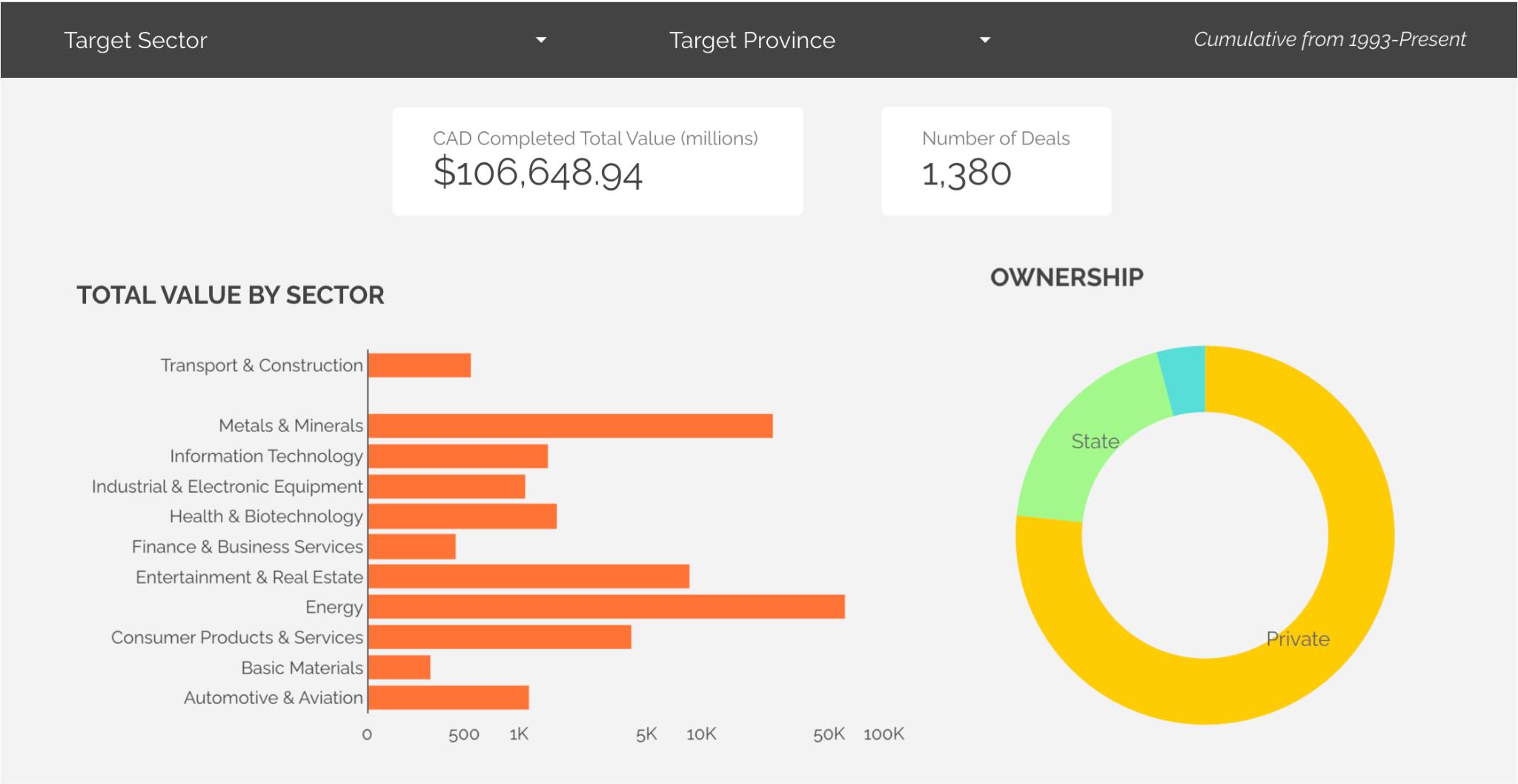
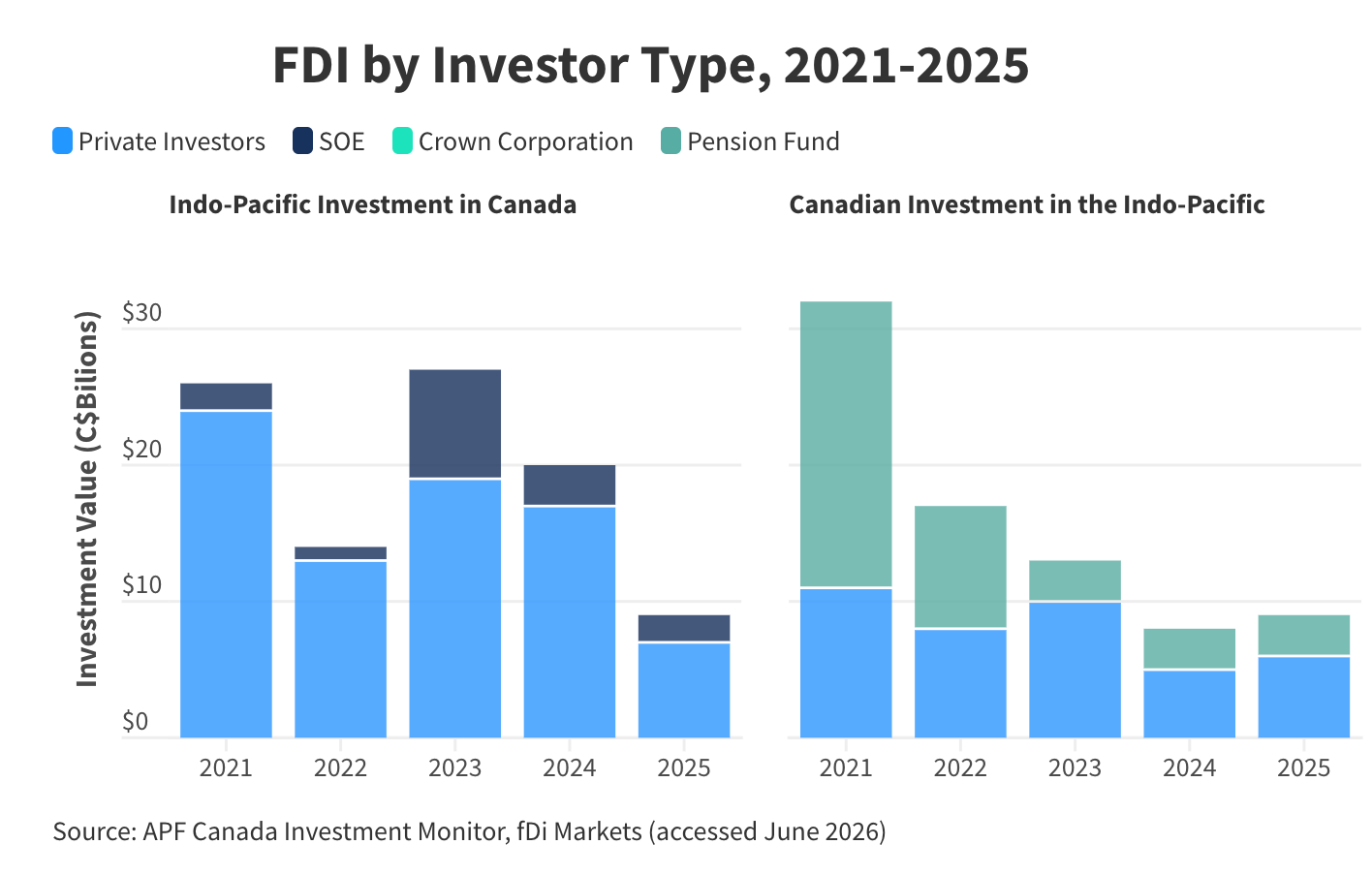
For a deeper dive on Chinese and Indo-Pacific investment in Canada, see The China Institute at the University of Alberta’s China-Canada Investment Tracker and the APFC’s Investment Monitor Report: 2025 Year in Review.
Coming up next: Chairman Xi Jinping’s impending visit to Washington. Thanks for reading.
That was incredibly insightful. Thanks so much. As always: Follow the money…