

This is the fifth in our series of blog entries with in-person coverage from the ongoing trial of Huawei Technologies (华为技术). Entry #1. Entry #2. Entry #3. Entry #4.
Trial Day 27: October 27, 2026
In an effort to evade U.S. trade sanctions, Huawei hid its business selling surveillance equipment to Iran while the Islamic Republic’s regime tried to suppress public unrest in 2009, a former Customs and Border Protection agent testified in Brooklyn on Tuesday, October 27.
Special Agent Louie Dean Fittz is cool under questioning by Department of Justice trial attorney Jasmin Fashami. Fashami is working in this Eastern District of New York (EDNY) courtroom alongside the Assistant U.S. Attorney Alexander Solomon on the federal prosecution of the Chinese multinational conglomerate on 12 counts of racketeering, trade-secret theft, bank fraud, money laundering and U.S. trade sanctions violations.
As week eight of the trial gets underway, Fittz describes his participation in an investigation into Huawei that started in 2016 over the misappropriation of source code from Cisco, the U.S. networking and telecommunications technology giant. In 2017, a grand jury was convened in the District of Columbia and later transferred to the EDNY.
The grand jury subpoenaed documents from Huawei Technologies USA in Plano, Texas, regarding work in what internal records called “Category A Countries,” those against which the United States maintains trade sanctions of varying degrees. One Huawei document spells out internal communications codes used: A1 for Afghanistan, A2 for Iran, A4 for Myanmar, A5 for Sudan, A6 for Cuba, A7 for Syria, A9 for North Korea, and A10 for Libya.
“Was the focus of the grand jury investigation Huawei’s work in sanctioned countries, and in particular Iran?” asks Fashami, petite with long brown hair in ringlets down the back of her black suit.
“Yes,” says Fittz. The gray-haired former Marine wears a dark blue suit with a silver lapel pin. He worked for 30 years with U.S. Customs and Homeland Security and as a criminal investigator and special agent in and around Dallas, Texas.
The grand jury subpoena, served on April 12, 2017, by two Department of Commerce agents to a Huawei in-house counsel, sought the names and titles of Huawei employees who provided goods and services to Iranian customers such as MTN Irancell and MobinNet, Fittz tells the courtroom.
One such Huawei employee was Zhang Yang, also known as Raymond Yang, who worked for Huawei in Tehran and later in Plano.
Confiscated Devices
Fittz says he interviewed the man surnamed Zhang on February 12, 2017 in a small interrogation room at the Dallas-Fort Worth airport as he tried to enter the United States. They spoke in English without an interpreter. Fittz determined that Zhang worked for Huawei in Iran and confiscated his laptop and cellphone, both of which were copied and returned to him at Huawei’s Plano office.
Many of the documents copied from Zhang’s devices are entered into evidence by Fashami. They include internal emails, business correspondence, project reports, technical specifications, network diagrams, training materials and company policies detailing Huawei’s telecommunications operations in Iran.
The evidence covers Huawei’s relationships with MTN Irancell and MobinNet, including WiMAX broadband projects, network infrastructure, equipment deliveries and technical support.
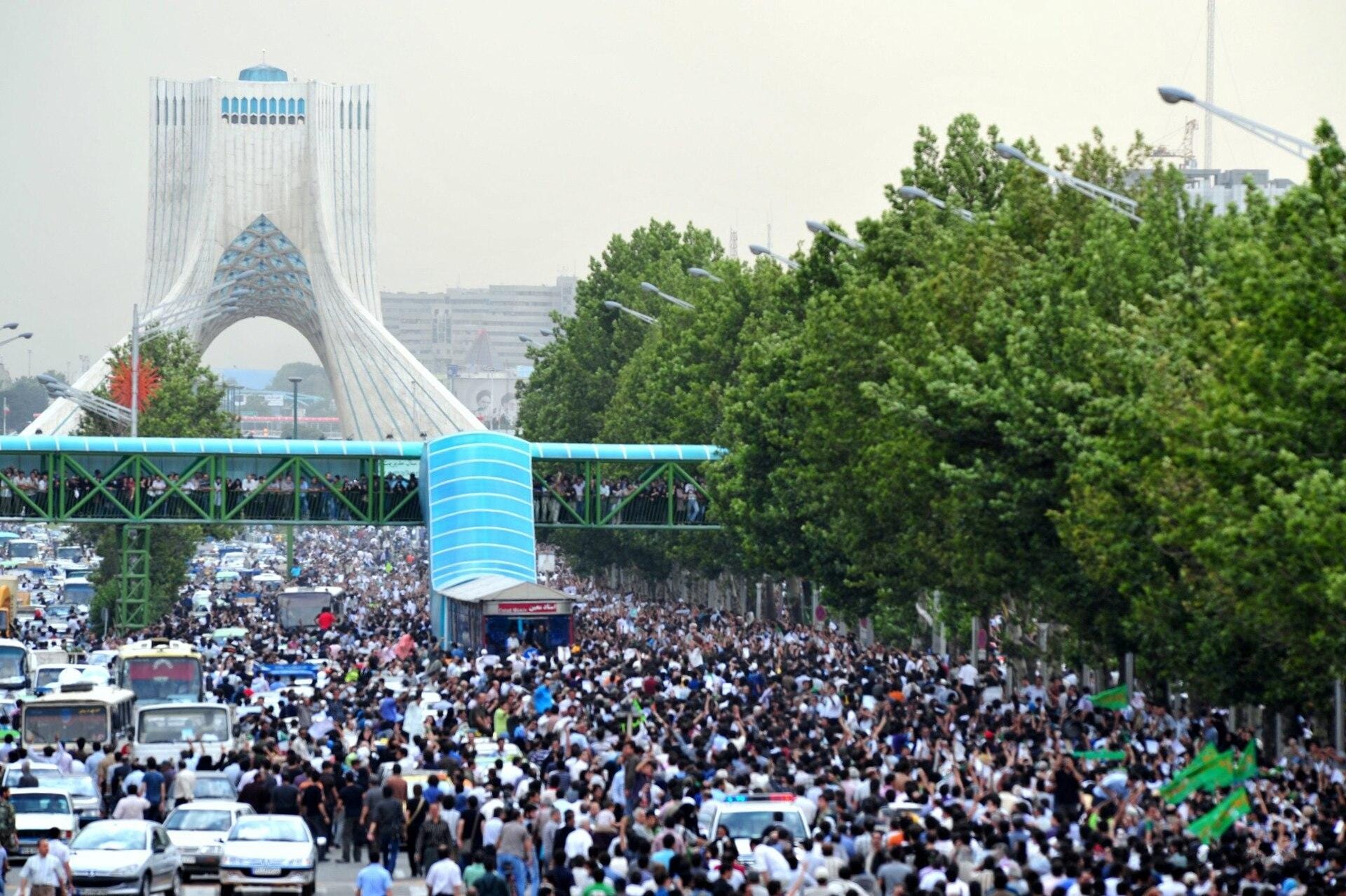
Of particular interest are sensitive documents around the summer and fall of 2009, when hundreds of thousands of Iranians poured into the streets of Tehran and other cities to protest the disputed reelection of hardline President Mahmoud Ahmadinejad.
Known as the Green Movement, the protestors were supporters of reformist candidate Mir Hossein Mousavi, who accused the government of rigging the June 12 election. Security forces cracked down, killing protestors, arresting thousands and restricting Internet and mobile communications. The unrest continued into December, as demands for electoral accountability broadened.
It was against this backdrop that Huawei’s internal correspondence, copied from Zhang’s devices, discussed telecommunications interception capabilities for Iranian customers, raising questions about whether technology supplied by Huawei could facilitate Iranian government surveillance of civilians during a period of widespread political repression.
One of Zhang’s emails is from human resources, noting that because of the turmoil in Iran, employees of Huawei may experience “inconvenience” and should exercise caution for their safety. It notes that 2009 is “an important year” for Huawei to achieve its international business objectives.
Another email notes that Huawei employees may leave work early, should not participate in the protests or get caught up as bystanders, and should avoid places such as Freedom Square and other protest locations in Tehran.
Another email recovered from Zhang is from a Huawei employee named Cong Zhangyang to a “Mr. Ali” asking him about schematic drawings for a proposed “setad” site for MobinNet.
Surveillance Solutions
Through questioning Fittz it comes out that “setad” is a powerful economic conglomerate established by edict of Iran’s supreme leader to seize local businesses and properties whose assets are then funneled into a “leader’s fund.”
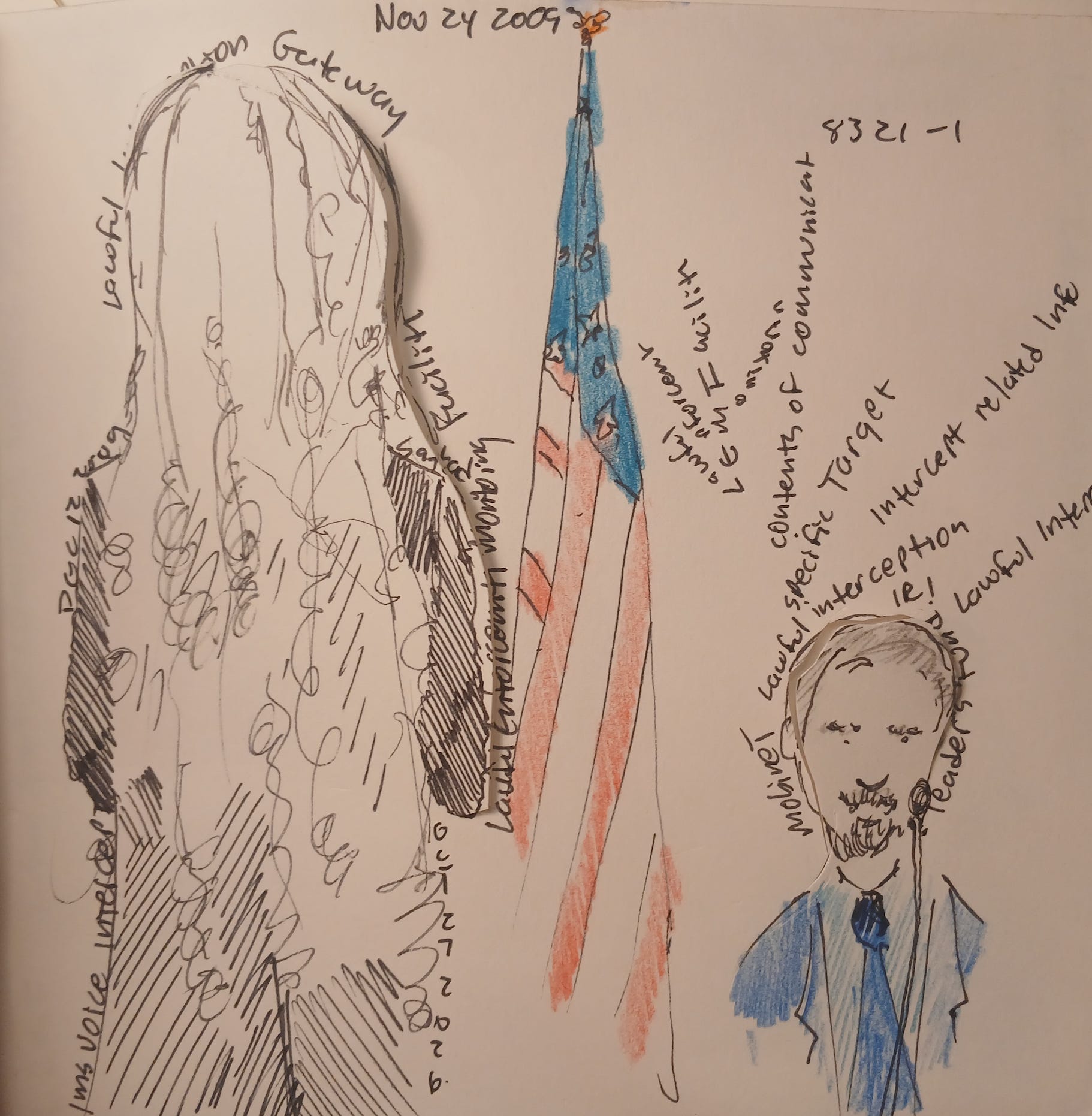
A Zhang email from November 23, 2009 is a weekly report on MobinNet’s WiMAX; while another, from the next day, has an attachment—a database spreadsheet for WiMAX broadband base station sites. Government exhibit 8335-T, from December 12, 2009, describes “voice interception solutions” being provided to MobinNet.
Another Huawei email describes “Lawful Interception Solutions,” being provided through a “Lawful Interception Gateway” to the “Lawful Enforcement Monitor Facility.” This email has a 259-page attachment that is labeled “Huawei Technologies—Proprietary.”
“Please help provide lawful interception solution,” says government exhibit 83416-T.
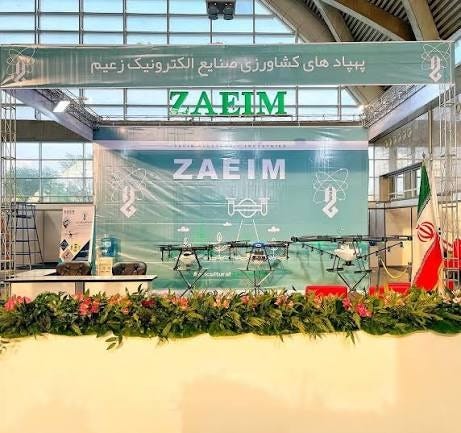
In another email from Huawei to its employees, Zaeim Electronic Industries Co. is identified as a local Huawei partner and Fashami asks Fittz to read portions of the email aloud to the courtroom.
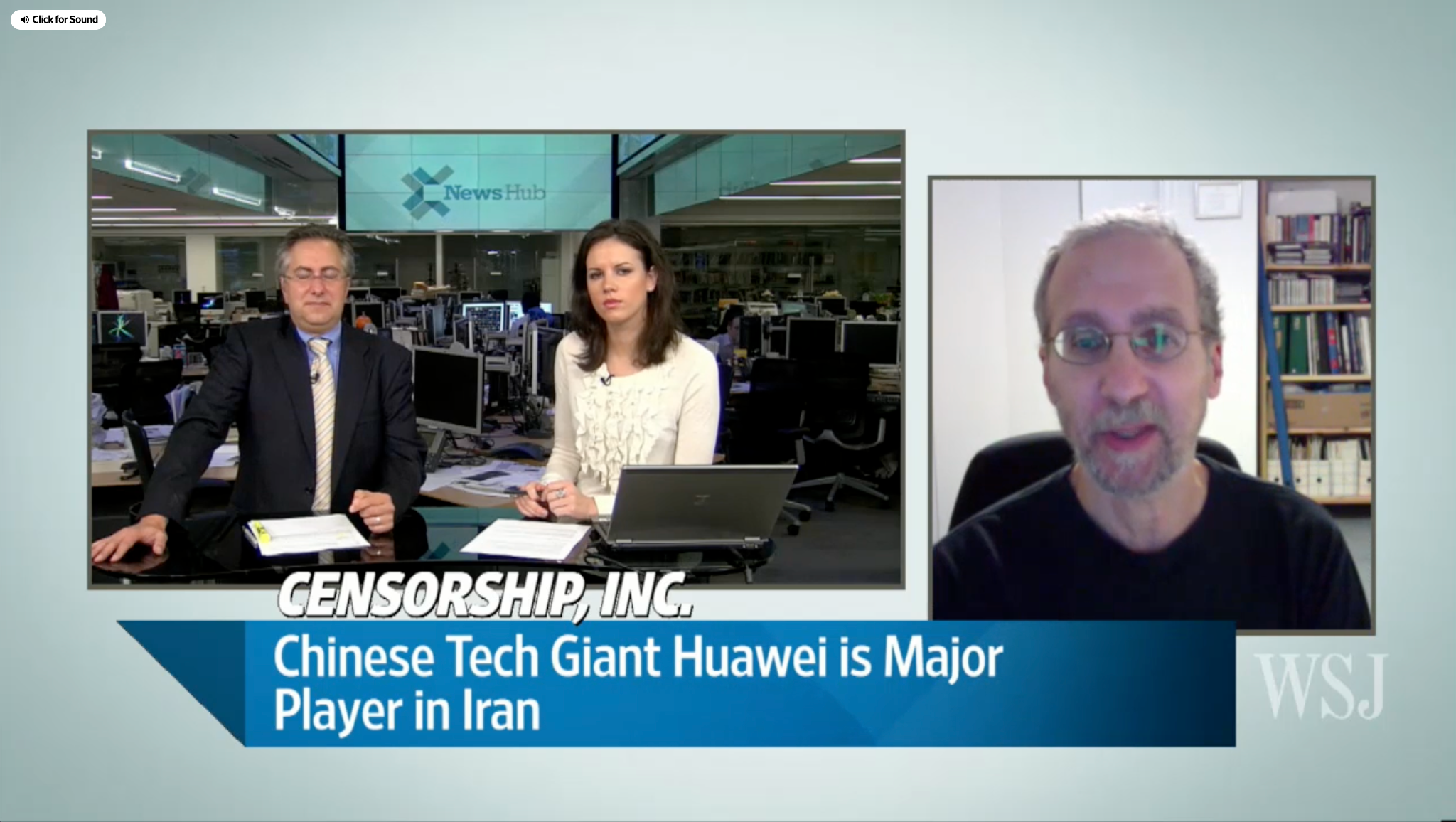
“The government has designated Zaeim as its representative. So Zaeim’s requests are government requests. The key is to communicate clearly with Zaeim,” the email says. [A 2011 Wall Street Journal report that touches on this partnership was entered into the Congressional Record].
Zaeim, MTN Irancell and MobinNet are all listed on the grand jury subpoena, the government establishes through questioning Fittz.
Another email shows a flow chart illustrating the flow of mobile communications, how they are intercepted and routed to the government, and another confirms that these interceptions can ascertain the name, phone number, email and home address of a mobile phone user.
In a January 6, 2013 Huawei email, the company is communicating with MTN Iracell and describes 735 “integrated collection sites.”
At 11:25 a.m. Fashami indicates that the government is about to shift to a new topic and suggests that the court consider a break. Judge Donnelly agrees and calls a 15 minute recess.
At 11:44 a.m. Judge Donnelly returns and apologizes that the courtroom is cold. She is reluctant to turn off the air conditioning because “the sauna that results is worse.” One young male juror who earlier wore just a white t-shirt has donned a gray jumper.
Returning to question Fittz about the documents he pulled from Zhang’s devices, Fashami introduces an email from May 15, 2009, before the Green Movement protests erupted, that makes clear that a Huawei partner, the Chinese state-linked CMEC International Trading Co., was to be listed as the bidder to supply MobinNet with surveillance equipment, not Huawei. [A 2012 Reuters special report details this relationship].
All Huawei logos should be removed from correspondence, the email says. “When dealing with this, please think of yourself as a CMEC person,” the Huawei email instructs company employees.

The government then introduces a global sales contract labeled “Huawei—Confidential—Unauthorized Dissemination Prohibited.”
It makes clear to Huawei employee recipients that they are prohibited from using the Huawei name when signing contracts from “Category ‘A’” countries: “The reseller must sign these contracts,” the email says, warning that failure to follow protocol could result in a “U.S. blackout for Huawei” and the drying up of the supply chain for U.S.-made component parts.
Why Hide?
It’s worth noting Huawei’s reliance on U.S. technology for its global business. In 2018, for instance, the company bought about $11 billion in products from U.S. suppliers, including semiconductors from Broadcom and Qualcomm and software from Google and Microsoft. Violating U.S. trade sanctions and losing access to those suppliers could seriously disrupt its global telecommunications equipment and smartphone businesses. [See this Congressional report from 2022].
Further emails from that period sent to Huawei employees include packing lists that note that since Iran is an embargoed country the goods are not to be shipped in the name of Huawei. “Hand it over to CMEC,” one email says.
As the morning drags on in court, through one email and invoice and spreadsheet after another, Special Agent Fittz always addresses Judge Donnelly and Ms. Fashami with a Texan “Yes, Ma’am,” or “No, Ma’am.”
The government fast-forwards to April 2018, to a redacted email from Huawei Device USA in-house counsel Charles de Chateauvieux, who informs employees in the Plano office that Huawei is now under investigation by the FBI and two other U.S. government agencies for Iran sanctions violations.
Evidence suggests that Zhang Yang (a.k.a. Raymond Yang) tried to leave the U.S. for Hong Kong on April 27, 2018, but never made it onto the plane because FBI agents arrested him at Dallas-Fort Worth International Airport.
Fittz, under Fashami’s questioning, walks jurors through a series of travel records, visa applications and a secretly recorded Mandarin-language telephone call between two Huawei Device USA employees: Ms. Dong Bo, in human resources, and Mr. Guo Li, an in-house lawyer.
In the transcript, which Fashami and Fittz take turns reading aloud in the two voices on the call, Guo tells Dong of an “urgent problem” involving a “carrier” who was supposed to leave the United States but had been arrested by the FBI at the airport.
Dong calls it an “escalation.”
“I’m afraid we will have to deal with a raid,” Guo replies, according to the government’s translation of their call. The two discuss transferring employees who worked in sensitive countries, including a man called Gary Zhao. Should he delete his computer’s contents? They worry about the security of their telephone conversation and suggest meeting in person.
The government’s exhibits establish that several Huawei employees working in Plano had previously worked in “Category ‘A’” countries sanctioned by the U.S. Gao Yunzhen had worked in Tehran. Yu Jianbo had served in Huawei’s offices in Tripoli and Khartoum. Zhao Xuhui (a.k.a. Gary Zhao) had worked in Sudan and Syria. Internal records show that Gao, Yu, and Zhang Yang were assigned to Plano for contracts that started in 2017 and were meant to run through 2021.
But their departures came much sooner.
Airline records show that Gao flew from Dallas to Hong Kong on February 28, 2018. Yu left Dallas for Beijing in March. Zhao departed the U.S. on April 28, flying from Dallas through San Francisco to Wuhan, and onward to Huawei’s headquarters city of Shenzhen on May 1.
Zhang, meanwhile, was arrested before he could leave.
The government appears intent on establishing a pattern for the jurors: Huawei employees with experience in sanctioned countries leaving the United States as federal investigators closed in, while company officials talked about the risks of an FBI raid, the transfer of personnel and the security of their communications.
By lunchtime, Judge Donnelly wants to know how much longer the government will need. Five to 10 minutes, Fashami says.
And the defence?
Huawei attorney Bitkower estimates that they can finish today.
“Today lasts ‘til midnight,” Judge Donnelly says.
“Two, two and a half hours,” Bitkower assures her.
The day after I wrote this post, Huawei executive Yang Chaobin was the first defence witness to take the stand. He said he had “never heard” of a corporate strategy to steal intellectual property (see Huawei on Trial #3).
According to reporter Noah Berman who wrote a thorough summary of the government’s case in The Wire China, Yang added: “No matter how robust the compliance policies are, there is no way to prevent every violation.”
Week nine of the U.S. vs. Huawei Technologies continues with the case presented by the defence, which is expected to last three weeks.
Meanwhile, in Beijing, the Fifth Plenum has weighed in, stating clearly that the Chinese Communist Party should have more influence in private tech firms:
“Strengthen Party-building efforts in platform companies, technology-innovation enterprises, and other such firms; establish a mechanism for dynamically adjusting the elevation of Party organizations within internet companies to higher administrative levels of management; and ensure that responsibilities for Party-building are fulfilled.”
AUTHOR’S NOTE
The court bars recording devices and does not make transcripts available immediately. Quotes are based on my notes.
RESOURCES
“Catch Us If You Can,” Noah Berman, The Wire China, November 1, 2026
“The story behind the Huawei story—it’s not a politically-orchestrated car accident in slow motion,” Strand Consult, December 14, 2018
This is the fifth in our series of blog entries with in-person coverage from the ongoing trial of Huawei Technologies (华为技术). Entry #1. Entry #2. Entry #3. Entry #4.
