

This is the eighth installment of Strategic Narratives’ in-person coverage of the federal criminal trial of Huawei Technologies (华为技术) in Brooklyn. Earlier entries: #1, #2, #3, #4, #5, #6, #7.
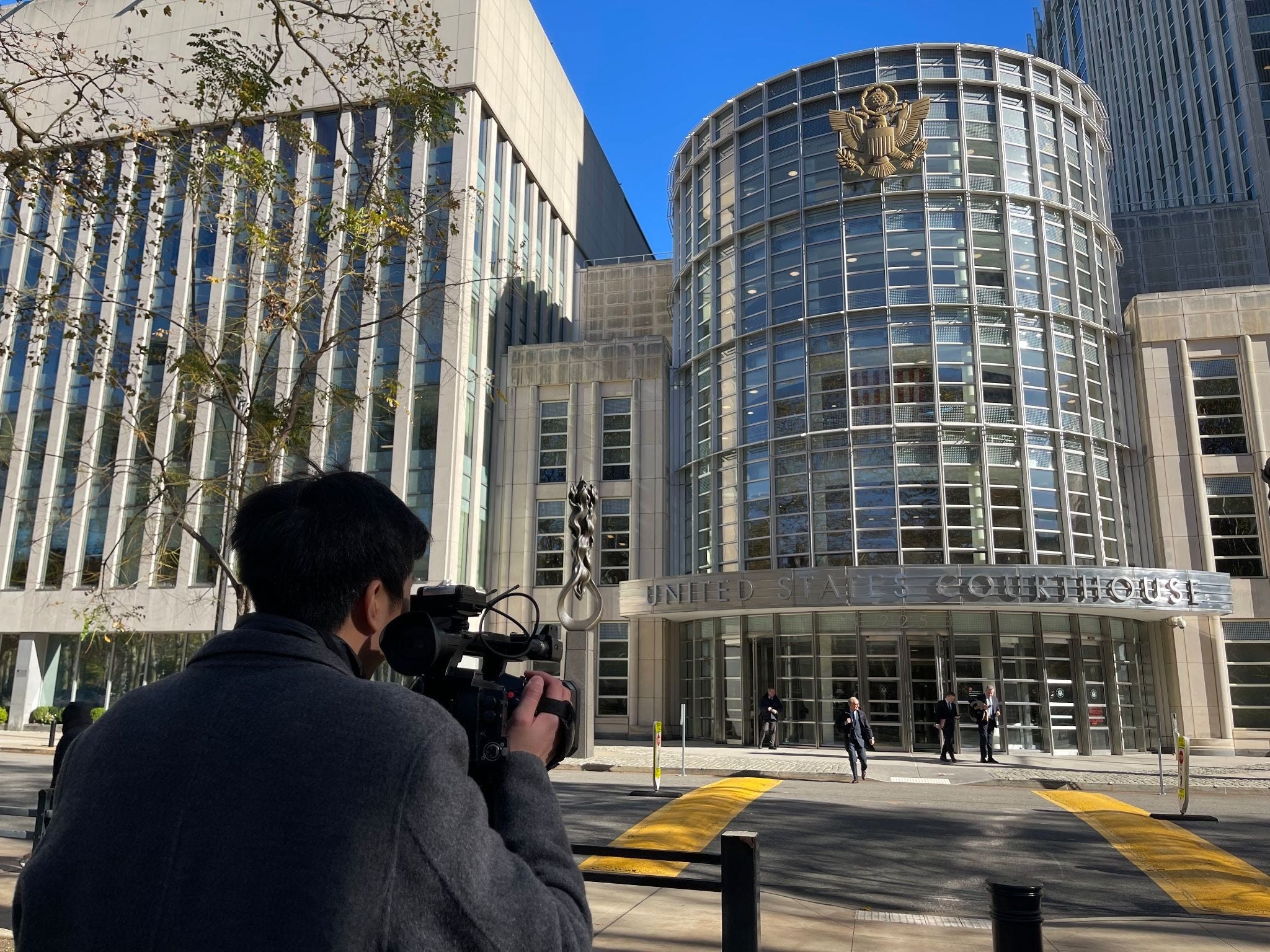
And now we wait…
A federal jury began deliberating the fate of Huawei Technologies on Wednesday Nov. 18, after an eleven-week criminal trial that cast the Shenzhen-based telecommunications giant as either a sprawling criminal enterprise or a victim of selective prosecution.
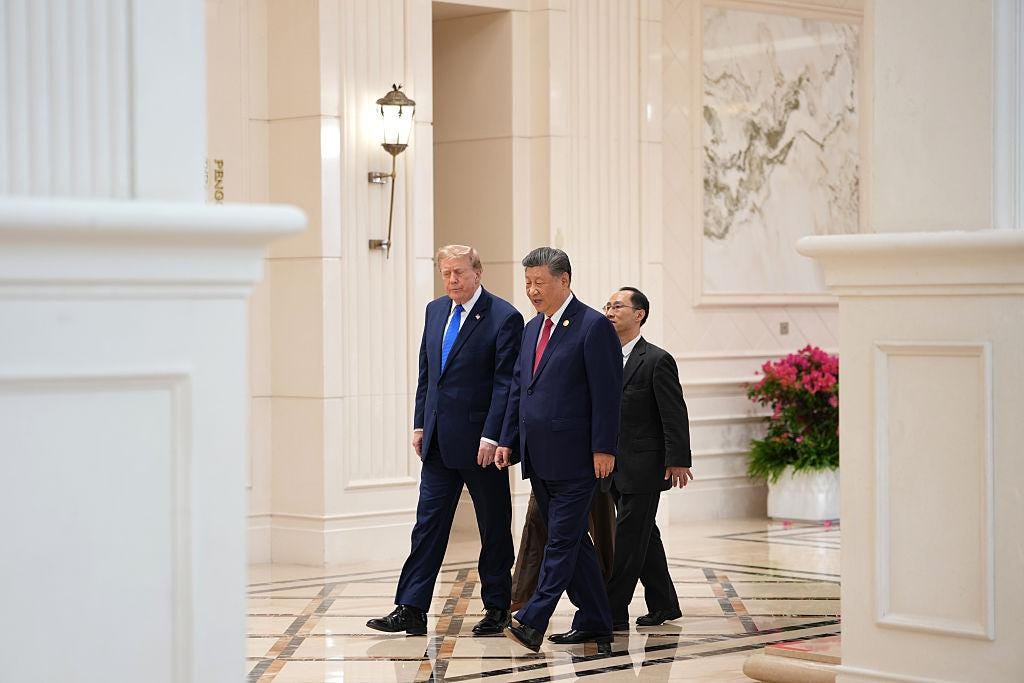
The moment could hardly be more charged: the next day, President Donald Trump met General Secretary Xi Jinping in Shenzhen, Huawei’s headquarters, on the sidelines of the APEC summit. As Washington and Beijing sought to manage disputes over trade, security and the future of technology and artificial intelligence, another tech titan, Nvidia, was also caught up in the nexus of espionage, export controls and strategic rivalry. It all started with Huawei, where the past is not only prologue but part of this week’s news.
In the trial at the Eastern District Court of New York, the four corporate defendants—Huawei Technologies, Huawei Device, Huawei Device USA and Futurewei—face 12 counts of racketeering, trade-secret theft, wire fraud and bank fraud, Iran sanctions offenses, money laundering, obstruction of justice, and conspiracy. Prosecutors say Huawei employees stole technology from the U.S. firms Cisco, CNEX, Quintel and T-Mobile, and from Japan’s Fujitsu, misled banks such as HSBC, Standard Chartered and BNP Paribas about Huawei’s business in Iran, and sought to frustrate U.S. grand jury investigators.
Huawei, whose defence was mounted by dozens of attorneys led by the Washington, D.C. law firm Steptoe LLP, denies the charges and insists the government assembled unrelated episodes into a fictional corporate conspiracy.
There has been no public indication whether Trump and Xi discussed the trial, but their meeting at Shenzhen’s Kylin Villa, a mere 11 kilometers (seven miles) from Huawei’s campus, underscored the strategic stakes surrounding a case that began nearly eight years ago.
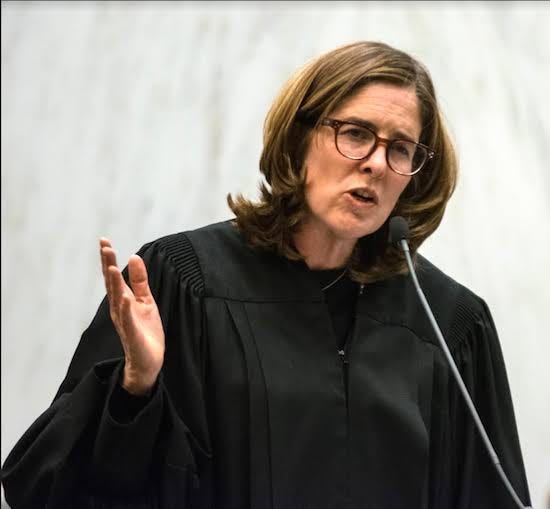
Central to the case was Judge Ann M. Donnelly’s admission into evidence of a 2021 deferred prosecution agreement involving Huawei CFO Meng Wanzhou, daughter of the company’s founder, Ren Zhengfei. Meng acknowledged the truth of a statement of facts without pleading guilty, securing the resolution of her case and her release from nearly three years of house arrest in Vancouver on September 25, 2021. Canadians Michael Kovrig and Michael Spavor were released from wrongful detention in China the same day in what came to be viewed by many as a de facto prisoner swap. Prosecutors relied on Meng’s account of her dealings with HSBC, while the defence argued that the agreement did not establish she had knowingly lied to the bank in 2013.
Trial Day 38, Mon., Nov. 16: A pattern, prosecutors say
Assistant U.S. Attorney Meredith Arfa closed the government’s case with a measured account of two decades of alleged theft, deception, sanctions violations and cover-ups intended to protect and expand what she called the “Huawei Enterprise” around the world.
A corporation, Arfa reminded jurors, acts through its employees. Arfa described how Huawei workers copied Cisco source code and manuals, disguising the company’s name by scrambling its letters in communications, stole the arm from the Tappy smartphone-testing robot in T-Mobile’s Seattle lab, and damaged a CNEX semiconductor circuit board while trying to assess the design of one of its chips. Prosecutors argued that these incidents showed a pattern of Huawei pursuing technology it had not developed itself. Frustrated with its own chip development, Huawei hired Xiamen University professor Bo Mao to access the CNEX board, test it and share confidential results, prosecutors alleged.
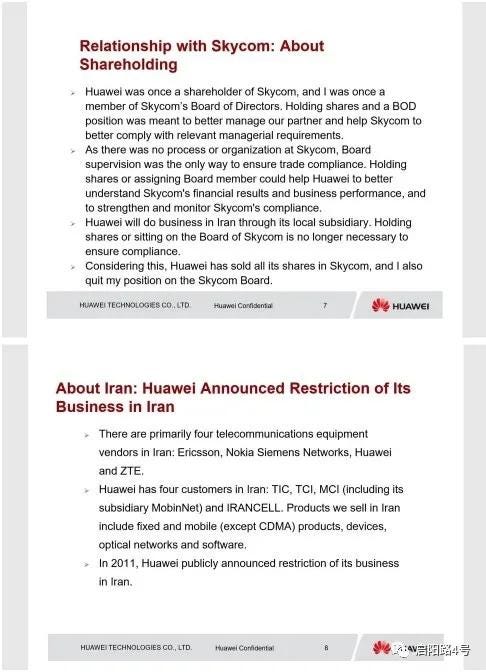
Arfa also traced the government’s banking case through Skycom, Huawei’s Iran-linked business partner, and HSBC, Standard Chartered and BNP Paribas. She argued that Meng Wanzhou misrepresented Huawei’s relationship with Skycom during a 2013 presentation to HSBC executive Alan Thomas, as Huawei sought a $1.5 billion loan and continued access to U.S. dollar-clearing services, which allow banks to process dollar-denominated transactions through the American financial system. Prosecutors alleged that Huawei violated U.S. sanctions on Iran imposed under the International Emergency Economic Powers Act (IEEPA) and administered by the Treasury Department’s Office of Foreign Assets Control (OFAC).
The government alleged that Huawei concealed Iran-related transactions and later interfered with a federal grand jury investigation. It allegedly did so by sending U.S.-based employees who were PRC nationals who had worked in sanctioned countries (Iran, North Korea, Syria and others) back to China before they could be questioned by U.S. investigators.
Arfa said the racketeering conspiracy was a catalogue of theft that saw Huawei reinvest its proceeds into the company’s U.S. operations, which were tasked with more theft.
“Thefts, lies, cover-ups,” she said, summing up the pattern.
Trial Day 39, Tues., Nov. 17: “Dirty windows”
The courtroom was packed Tuesday morning, with lawyers from China and the United States filling the benches. Two Steptoe lawyers from Hong Kong spoke Mandarin in the gallery, offering this reporter a seat and loaning me a pen.
One asked what I thought of the government’s case. I deflected, expressing surprise that jurors had not been sequestered amid extensive coverage of the U.S.–China technology rivalry.
“It’s a sensitive moment,” she said, allowing that she was U.S.-educated.
Steptoe’s lead attorney on the case, Brian Heberlig, a big, ruddy-faced man, stood to deliver Huawei’s answer in a dark blue suit and pale blue tie.
Speaking louder and with more emphasis than the government’s Arfa, Heberlig said prosecutors had decided Huawei was guilty and then worked backward, moving the goalposts whenever evidence failed to fit. He asked his colleagues to illustrate his arguments with AI-generated images as he spoke. The first showed the Midtown Manhattan skyline through the grimy windows of a high-rise building. That, he said, was the government’s distorted view of Huawei. He contrasted a handful of disputed incidents with a company operating in 170 countries, serving billions of customers and investing heavily in research and development.

Judging the Huawei enterprise by five incidents, Heberlig suggested, was like reviewing a two-hour film from five still frames.
Heberlig called the 2013 memo offering cash incentives to Huawei Device USA employees to collect intel from competitors “well-intended but poorly executed.” Its small rewards, ranging from $30-$300, Heberlig argued, were scarcely proof of a global criminal policy; managers had rebuked the author, Han Shitao, and revised the company’s guidance. Huawei’s “wolf” culture meant competitiveness, Heberlig said, not theft. No compliance program could guarantee perfect behavior across hundreds of thousands of employees.
Heberlig worked through the government’s accusations of IP theft individually. He maintained that CNEX’s damaged board was the result of accidental handling, not sabotage: Huawei’s crude repair with green wires and a glue gun hardly suggested an effort to conceal its actions, let alone espionage. The “per-user tilt,” or “PUT” concept to measure a circuit board’s speed was already publicly known when Huawei engineer Sean Ma allegedly stole it from Quintel and tried to patent it as his own.
“You can’t steal a secret that’s not a secret,” Heberlig said.
On Cisco, Heberlig acknowledged copying but said the incident prompted stronger compliance controls. During a break, prosecutor Alexander Solomon objected to Heberlig’s suggestion that Cisco had never complained again; Judge Ann Donnelly told jurors to disregard that statement because Cisco had filed a lawsuit. On T-Mobile, Heberlig conceded individual misconduct by employees associated with Tappy but emphasized that they were fired.
“We’re not here to defend them,” he said. In a reference to the movie Jerry Maguire—when a sports agent played by Tom Cruise tells his football star client, played by Cuba Gooding, Jr., to “help me help you”—Heberlig sought to recast Huawei’s relationship with T-Mobile as cooperation rather than conspiracy.
The defence challenged the prosecution’s Iran narrative. Selling civilian telecommunications equipment to Iranian operators was not itself proof of aiding repression, Heberlig argued. He showed jurors a photograph of a telephone pole in rural Iran, as he claimed that Huawei’s technology was helping the people, and questioned inferences about surveillance drawn from equipment lists and witness testimony. Heberlig challenged Iranian witnesses including Parham Baheshti, distinguished private contractor Zaeim from government-linked Setad, and accused prosecutors of speculating that Huawei equipment had helped the Islamic Revolutionary Guard Corps put down the Iranian popular uprising known as the Green Movement in 2009.
Skycom, he argued, was no secret: it had appeared alongside Huawei at a Tehran trade show, and HSBC employees discussed the relationship in emails. Meng’s description of Skycom as a partner was not an intentional lie, Heberlig maintained, nor did her later deferred prosecution agreement establish what she knew in 2013.
“An untrue statement is not an intentional lie,” Heberlig said. “Words matter.”
Heberlig compared dollar clearing to FedEx: customers request delivery without choosing a truck, airplane or sorting facility. Some dollar transactions cleared in Hong Kong, and Huawei also used other currencies and adjusted arrangements when HSBC bankers raised concerns, he said. Prosecutors still had to establish the necessary U.S. connection and intent, not merely show that Huawei had done business in Iran.
On obstruction, the defence argued that moving employees to China was routine, not a cover-up. The recorded exchange between Huawei lawyer Guo Li and human-resources employee Dong Bo showed caution, it said, not a criminal plan. Why would a successful global company risk everything?
Heberlig ended his address to the jurors by invoking American justice’s protection of foreign defendants: an acquittal, he said, would honour that promise.
Trial Day 40, Wed., Nov. 18: The prosecution’s rebuttal
Assistant U.S. Attorney Robert Pollack began rebuttal late Tuesday, insisting that jurors should rely on documents, bank records and common sense rather than the defence’s portrait of corporate achievement. Huawei, he argued, wanted access to U.S. markets and dollars and therefore had to follow U.S. rules.
“Huawei did not fall off a turnip truck and land in federal court,” he said.
Pollack challenged the notion that the incidents were isolated. He invoked Huawei’s handling of Raymond Zhang’s arrest at a Texas airport and the recorded Guo Li–Dong Bo conversation. Pollack said corporate responsibility could attach to employees acting for the company, even if some colleagues were conscientious.
On Wednesday morning, I rode up to the courtroom in the elevator with defence attorney Douglas Axel of Sidley Austin LLP. After exchanging greetings, he asked me my interest in the case and I told him about Strategic Narratives and Michael Kovrig, whose name did not appear to ring a bell before I explained that Kovrig was wrongfully detained in Beijing soon after Meng’s arrest, then held for 1,019 days. Heberlig told me he was taking the case one day at a time. Inside, young lawyers logged their hours in online payroll trackers (one had worked eight hours on Sunday), while a senior colleague joked about playing concertos in the Steinway Piano showroom on the ground floor of his firm’s Midtown office building.
Former Huawei Chief Security Officer and Spokesman Andy Purdy was back in court, jotting notes on a legal pad in the gallery. Judge Donnelly arrived at 9:43 a.m. and pleaded with the lawyers on both sides, “Please don’t file more versions of the charge.”
Standing beneath the courtroom’s high, sunny window, Pollack resumed his rebuttal to the jurors at 9:46. He dismissed the Jerry Maguire comparison: Huawei workers were not helping T-Mobile, he said. “They were trying to steal.” He revisited the Han Shitao cash-for-intel memo and Ren Zhengfei’s dismissive face-to-face response to IP theft complaints. Huawei’s founder and top boss may have changed the company’s policies, but Chandler said that Ren had not apologized after his company got caught. What’s more, he had been sarcastic, telling Chandler, “Just tell me what colours of the spectrum Cisco owns and I’ll be sure not to use them in my next product.”
Policies on paper, Pollack argued, could not immunize a company from crimes by its agents.
Meng’s HSBC presentation was titled “Trust, Compliance and Cooperation,” Pollack noted with irony. Calling Skycom a partner, he said, was meant to reassure the bank without disclosing the underlying reality. A banker’s negligence would not excuse a company’s deception. Nor was the Racketeer Influenced and Corrupt Organizations Act (RICO), passed by the U.S. Congress in 1970, reserved for combatting the Mafia: it could also be used today against a corporate pattern of racketeering, Pollack argued.
At 11:04 am, Pollack urged jurors to set aside distractions, use common sense and find Huawei guilty on all counts.
A sidebar followed. White noise filled the courtroom to prevent the jurors from hearing Judge Donnelly’s words as attorneys from both sides crowded around her. Those who couldn’t get close enough to the bench gathered around nearby computers reading the court reporter’s live transcript of what was being discussed for a hint of what would come next.
Five minutes later, Donnelly began the longest jury charge she said she had ever delivered.
The judge instructs the jury
Judge Donnelly, already soft-spoken, was fighting a cough as she worked through reading aloud more than 100 pages of instructions with sips of water and tea and cough drops. Over the next three hours, almost without break, she carefully reminded jurors that an indictment was only an accusation; the government bore the burden of proof throughout; Huawei was presumed innocent until proven guilty; and that the jurors, not she, the judge, decided the facts. Judge Donnelly distinguished direct evidence from circumstantial evidence. Someone who saw rain falling could testify directly to it, she said, while a wet umbrella carried into a windowless courtroom could allow jurors to infer the circumstance that it had been raining outside.
She explained conspiracy, corporate liability, trade secrets, wire fraud, bank fraud and the rules governing the Eastern District of New York. At 11:50 am, a juror said, “Sometimes we can’t hear you.” “Oh, has that been true all along?” Donnelly asked, after weeks of urging witnesses to speak up. Later, when lawyers sought yet another revision, she was displeased. “I’m not trying to be crabby, but I am a little crabby.”
Judge Donnelly reviewed the alleged OFAC conspiracy, IEEPA violations involving banking services to Iran, money laundering and obstruction. Around 2 pm she returned to the sweeping RICO conspiracy, Count 1, explaining that the government had to prove there had been an agreement between two or more people to commit a crime, but not necessarily that its objectives succeeded. The lawyers’ arguments were not evidence, the judge reminded the jurors. They were to follow her legal instructions.
Finally Donnelly described deliberations. Jurors should listen candidly and respectfully, but not surrender an honestly held conviction merely to reach unanimity. When she noted that juror number one traditionally serves as foreperson, the American man of East Asian descent in that seat shook his head, prompting laughter across the courtroom. A deputy U.S. Marshall was sworn in and promised to keep the jurors shielded from interference until they reached a verdict. Judge Donnelly thanked the jurors for their patience.
“This has been a long and difficult trial,” she said.
Half a world away in Shenzhen on Thursday, Donald Trump opened his meeting with Xi Jinping by saying their new Board of Trade had brought “greater balance” to U.S.-China relations.
Nobody who I asked in the courtroom thought it reasonable to expect that the jury could come to quick unanimous decisions about all twelve counts against Huawei based on eleven weeks of testimony and reams of evidence.
Could I get a heads-up when a verdict was close, I asked in an email to the prosecutor’s office in the U.S. Department of Justice?
“Stay in the courthouse or nearby,” came the reply.
AUTHOR’S NOTE
The court bars recording devices and does not make transcripts available immediately. Quotations from courtroom proceedings are based on my notes.
RESOURCES
“The world’s largest telecoms firm is on trial and the outcome has global implications,” NPR, November 8, 2026
PREVIOUS COVERAGE
“Huawei on trial, #7,” Strategic Narratives, November 2026
“Huawei on trial, #6,” Strategic Narratives, November 2026
“Huawei on trial, #5,” Strategic Narratives, October 16, 2026
“Huawei on trial, #4,” Strategic Narratives, October 16, 2026
“Huawei on trial, #3,” Strategic Narratives, October 16, 2026
“Huawei on trial, #2,” Strategic Narratives, October 16, 2026
“Huawei on trial, #1,” Strategic Narratives, October 16, 2026
